A jaw that clicks or pops when you chew usually means the small cushion of cartilage inside the jaw joint is slipping slightly as the joint opens and closes. On its own, without pain or locking, a click is common and often harmless. A click that comes with pain, a jaw that catches or locks, a grating sound, or fullness in the ear is worth an exam. Those signs point to a joint or muscle problem that is easier to calm early.
What is the clicking sound in my jaw?
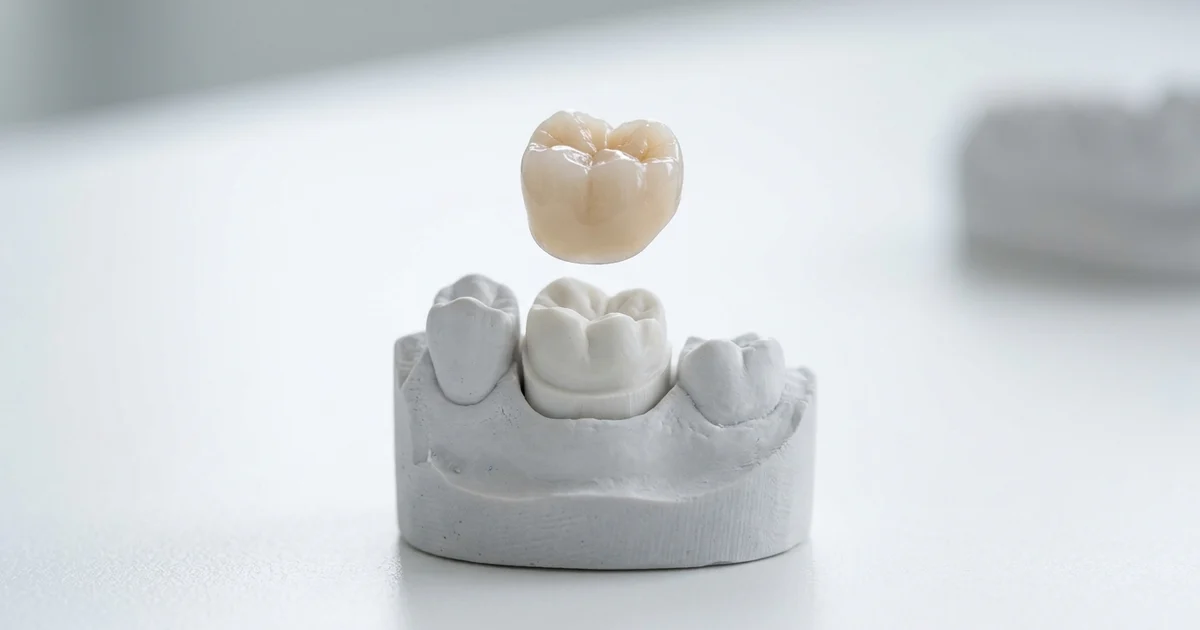
The click is the sound of a small disc of cartilage moving out of place and back as the jaw joint opens and closes. The joint sits just in front of each ear, where the lower jaw meets the skull, and the disc rides between the two bones as a cushion. When the disc slips ahead of where it belongs and the jawbone snaps over its edge, you hear the click.
One side often clicks on its own, because the two joints never move in perfect step. Small differences in muscle tension, the side you favor when you chew, or an old knock to the chin can leave one disc looser than the other.
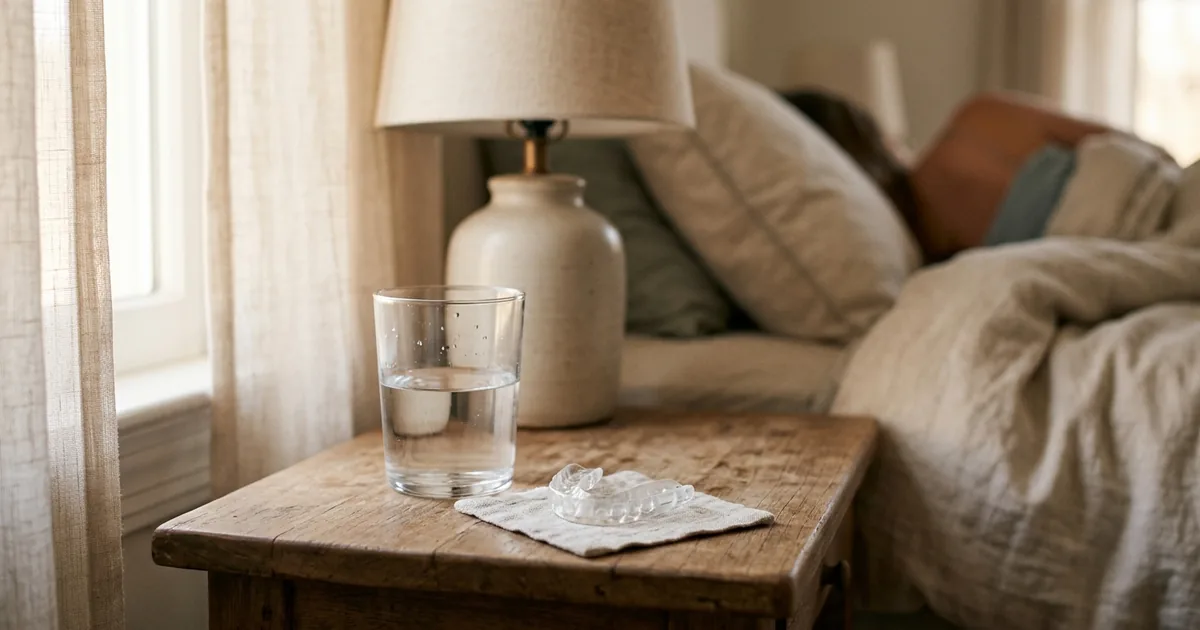
Clicking also comes and goes. A tense week, a tough steak or a long dental visit can bring it back after months of quiet, and it can fade just as easily. Our page on custom night guards and TMJ care describes what a guard does for the muscles around that joint.
Is painless jaw clicking when chewing something to worry about?
No. A click with no pain, no catching and a jaw that opens fully is usually something to note at your next checkup and otherwise leave alone. Mayo Clinic's entry on TMJ disorders says that a clicking jaw with no pain or limited movement probably does not need treatment.
The answer changes if any of these joins the click:
- pain in the joint, or in the muscles at the side of the face, when you chew
- a jaw that catches on the way open or shut, even briefly
- a grating or gravel sound in place of a clean click
- a mouth that opens less than it used to
- a click that started after a blow to the jaw
Any one of those is a reason to book an exam, because the joint or the muscles are under more strain than they can absorb.
Why does chewing hurt as well as click?
Chewing that hurts as well as clicks usually means the muscles that move the jaw are overworked, the joint itself is irritated, or a tooth is cracked. Where it hurts, and when, tells them apart. Muscle pain is a dull ache along the side of the face or the temple, worse by evening or after a big meal, and it tends to spread.
Joint pain is sharper, sits right in front of the ear, and spikes at the moment the click happens. Tooth pain is a short jolt on one tooth when you bite down and let go, and it has nothing to do with the sound. For that third pattern, read our post on a cracked tooth that hurts when you chew.
Why does my ear feel full or ache?
The jaw joint sits in front of the ear canal, and the same nerves serve both, so an irritated joint is often felt as a full or aching ear. The telling sign is that the fullness changes when the jaw moves, eases when the jaw rests, and comes with no cold, no hearing loss and no fluid. Ringing that rises and falls with jaw tension fits the same pattern.
An ear that hurts on its own, drains, or affects your hearing is an ear problem first, and Dr. Estrada works with your physician when the ear is the concern. An exam tells the two apart, because pressing on the joint and the chewing muscles reproduces joint pain and does nothing to an ear infection.
What do the signs usually mean?
Each row below is a starting point for the exam, and none is a diagnosis on its own.
| Sign | Usually means | What to do |
|---|---|---|
| Painless click | Disc slipping slightly, joint otherwise fine | Note it. Mention it at your next checkup |
| Click with pain | Overworked muscles or an irritated joint | Book an exam. Softer food meanwhile |
| Jaw catches or locks | Disc held out of place | Call the same day if it stays locked |
| Grating or grinding sound | Worn joint surfaces, often over years | Exam, with an X-ray if needed |
| Ear fullness with jaw movement | Joint irritation felt through the ear | Exam. Physician if the ear hurts alone |
| Sore jaw in the morning | Clenching or grinding in your sleep | Exam for wear, and often a guard |
| Pain while chewing, fine at rest | Muscles or joint under load, or a tooth | Exam to tell which |
What can I do this week?
Rest the joint the way our night guard page describes it, with warm compresses on the jaw muscles, softer foods during a flare, and the teeth resting slightly apart during the day. Skip chewing gum, and avoid wide yawns and big bites. The NIH's NIDCR page on TMJ disorders notes that for most people the discomfort eases on its own, and that simple self-care is often enough to settle it.
For a sore joint, an over-the-counter pain reliever you already know is safe for you, taken as the label directs, is the right starting point. Check with your doctor or pharmacist first if you take a blood thinner, have kidney, liver or stomach problems, or are pregnant.
A jaw that is sore mostly when you wake up points to clenching or grinding in your sleep, and we go into that pattern in our post on teeth grinding and TMJ pain. Grinding sometimes comes with disrupted breathing at night, which our post on how grinding and sleep apnea travel together explains. A bite that does not meet evenly keeps the joint working harder, and our post on jaw clicking as a sign of a bite problem covers when orthodontics is part of the answer.
When is jaw clicking when chewing urgent, and what does the exam check?
A jaw locked open or shut, a click that starts after a blow with swelling, or a mouth that cannot open wide enough to eat is a same-day call. Two hospital-first signs apply here too, which are swelling that spreads down the neck or under the jaw, and a mouth that cannot open. Those mean the emergency room or 911 now, then a call to the office.
We are open Monday through Friday, 9:00 AM to 5:30 PM. Outside those hours, leave a message, and urgent calls are returned first thing.
The exam itself is short. Dr. Estrada measures how far you open and whether the jaw swings to one side on the way. He presses on the joint and the chewing muscles to find what is tender, and looks for wear facets, the flat polished spots on teeth that show clenching. He checks how the bite meets, and adds an X-ray when the joint itself needs a look.
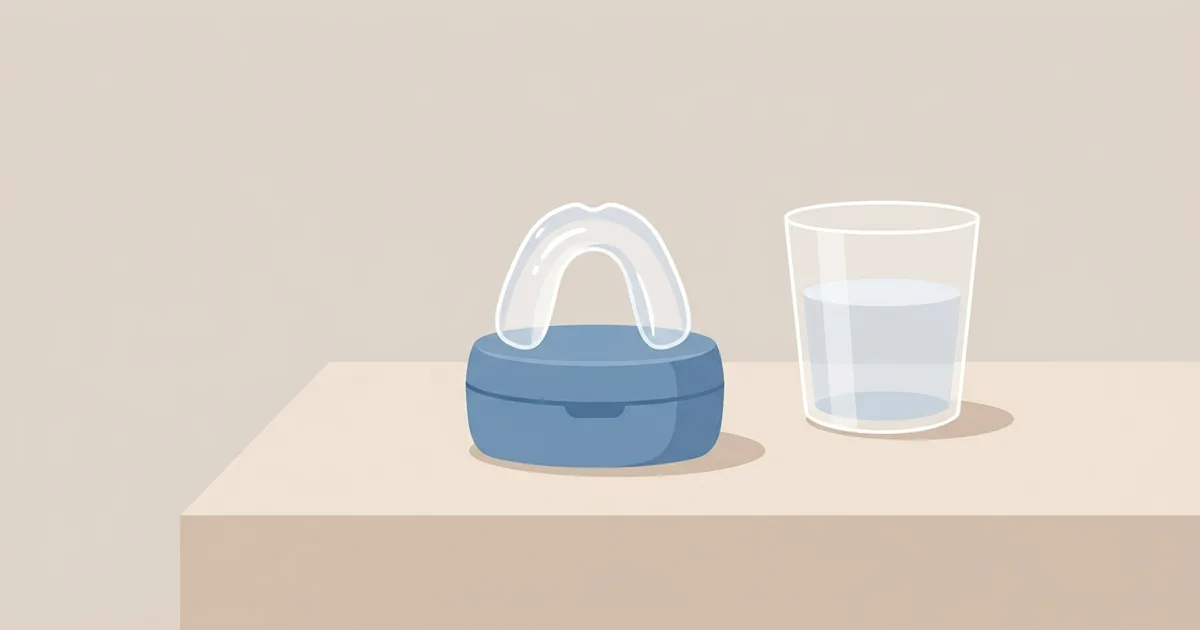
From there he builds the plan around what he finds, and it often starts with a custom night guard to take the load off the muscles while the cause is sorted out. The guard is relief, and the clicking itself is managed, not cured.
Call (727) 869-3886 or use our contact page, and tell us whether the click hurts, catches, or started after an injury. This article is general information, not a diagnosis. Whether the click is a sound to watch or a joint that needs help is decided at the exam.
Frequently Asked Questions
Can a clicking jaw fix itself?
Often, yes. A click that comes with a stressful stretch or a change in chewing habits can fade as the muscles relax and the disc settles back into its usual path. What helps it along is rest for the joint, softer food for a while, and keeping the teeth apart during the day. A click that has started to hurt or catch is less likely to settle without an exam.
Why does my jaw only click on one side?
The two jaw joints move together but never in perfect step, so one disc can slip while the other stays put. Chewing mostly on one side, sleeping on one side, a missing back tooth that shifts the load, or an old bump to the chin can all leave one joint looser. One-sided clicking is common and is not by itself more serious than clicking on both.
Does chewing gum make jaw clicking worse?
It can. Gum keeps the chewing muscles working for long stretches without a break, which tires them and can make the disc slip more often. If you notice more clicking or an ache at the side of the face on days you chew gum, that is a reason to stop for a few weeks and see whether the click settles. Hard candy and ice do the same thing.
Can a night guard stop my jaw from clicking?
A custom guard eases the load on the jaw muscles and joint, which often reduces the ache and can make the click quieter or less frequent. It is relief, and the click itself usually stays, because the disc still sits where it did. Dr. Estrada fits a guard as part of a plan built around what the exam finds, and tells you what it is likely to change.