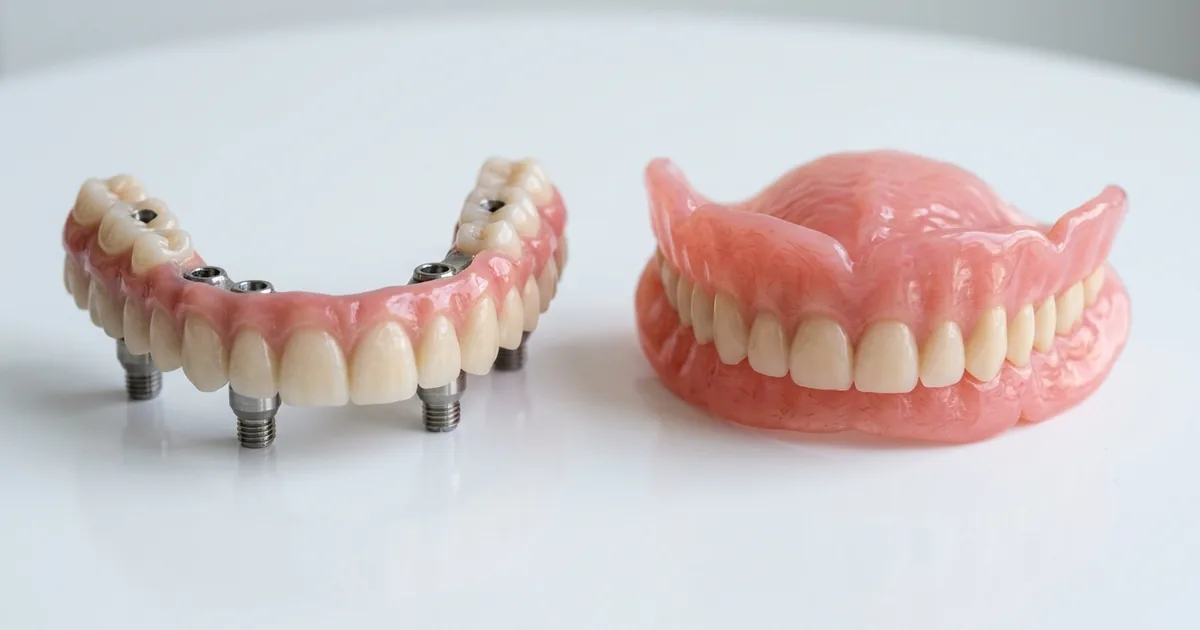
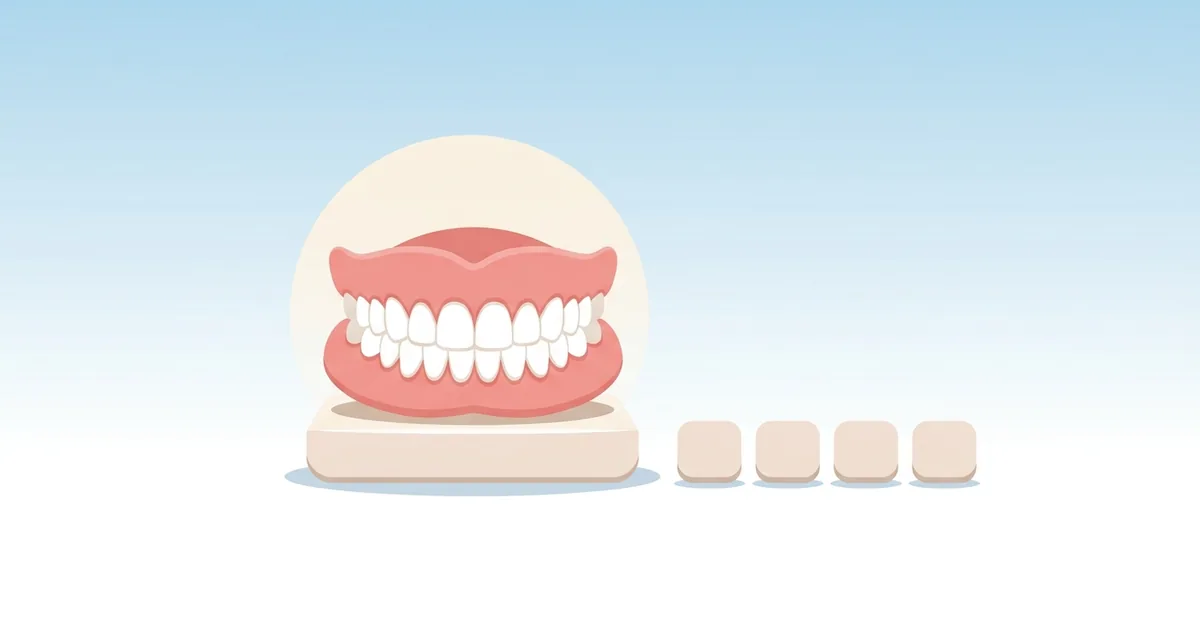
Most people feel at home with new dentures within a few weeks. Speech and the extra saliva settle first, and confident chewing comes last. The bulky, wet, "too big" feeling in the first week is your mouth learning a new shape, not a sign that the denture is wrong.
What does the first week with new dentures feel like?
Fullness is the first thing almost everyone notices. The denture covers more of the mouth than teeth ever did, so the lips and cheeks feel pushed out and the tongue keeps finding the edges. Saliva runs more than usual, some words come out with a lisp, and an upper denture can bring on a mild gag feeling at the back of the palate. Gagging that lasts past the first weeks is a fit question, and why an upper denture makes you gag is answered in its own post.
Small sore spots appear and fade as the gums get used to carrying a plate. All of that is a normal first week with full and partial dentures, for a first-time wearer and for anyone replacing a set worn for years. The American Dental Association's MouthHealthy guidance on dentures says the same thing, that new dentures feel awkward for a few weeks until you become used to them.
If your dentures were fitted right after your extractions (an immediate denture), the gums underneath are also healing, which adds its own timeline and a reline or two along the way. Our post on the first month with an immediate denture follows that healing in detail.
Getting used to new dentures week by week: what settles when?
The pattern below is typical. Yours may run a little faster or slower, and that is fine, as long as most weeks feel a little easier than the last.
| When | What you notice | What is normal | What to practice |
|---|---|---|---|
| Days 1 to 3 | Everything feels big. Extra saliva, a lisp, a few tender spots. | All of it. The mouth has not accepted the denture yet. | Wear it all day if you can. Swallow often. Read aloud ten minutes, twice a day. |
| Week 1 | Saliva eases. Speech clears by week's end. Sore spots come and go. | Sore spots that fade in a day or two. Tired cheeks and jaw. | Soft foods cut small, chewed on both sides. Keep reading aloud, slowly. |
| Weeks 2 to 3 | The denture starts to feel like yours. Chewing is steadier. One spot may keep returning. | Slipping on a yawn or a laugh. A sore spot that settles. | Add firmer foods one at a time. Practice the sounds that still trip you. Note any spot that keeps coming back. |
| Weeks 4 to 8 | You forget the denture for hours at a time. Eating feels closer to ordinary. | Possibly one small adjustment. Fit feels looser or tighter as muscles adapt. | Keep cleaning steady. Take it out overnight. Book the adjustment. A rub does not improve alone. |
How do I stop lisping or whistling?
The tongue has spent decades hitting your own teeth in the right places for an s, an f or a th. Now the targets have moved a few millimeters, and the sounds come out soft or with a whistle. Practice shortens this stage. Waiting does not.
Read aloud every day, slowly, and repeat the words that catch, such as "sixty-six," "fifty-five," "thirty-three," and anything heavy with s and f sounds. Before you speak, bite down gently and swallow. That seats the denture so it does not shift under the first word. If a whistle keeps coming from the same spot after the first couple of weeks, say so at your check, because a small change to the plate can fix what practice cannot.
Why so much saliva, and does it stop?
The mouth reacts to anything new and large the way it reacts to food, so the glands respond as they would to a meal. For the first few days, swallow more often. The glands usually calm down within the first week or two.
Some older wearers notice the opposite. The mouth feels drier, usually because medications have already reduced saliva and the denture now sits on gums that have less of it. A dry mouth makes a denture rub more and stay put less, and we have a separate post on dry mouth in older adults.
How should I start eating?
Start with soft food in small pieces. Cut everything smaller than you think you need, and chew with both sides of the mouth at the same time so the denture stays level. Avoid biting through anything with the front teeth in the early weeks. A denture is built for grinding food between the back teeth, and front biting tends to tip a lower plate. This is the technique we teach every new wearer.
Move to firmer foods one at a time as the gums and cheek muscles catch up, and keep sticky and very chewy foods for later. A sip of water with meals helps the first bites go down. Chewing improves quickly once both sides become the habit.
If your denture is a partial
A partial has its own learning curve, mostly to do with the clasps and the path it follows into place. Seat it with your fingers, pressing along the path it was designed to follow, and never bite it into position. Biting can bend a clasp or crack the acrylic. Take it out the same way, with fingers on both sides so it lifts evenly.
The natural teeth that carry the clasps need extra care, because food packs around them more than it used to. Brush those teeth and the clasps after meals when you can, and expect a little food trapping at first until you learn which foods settle there. A clasp that feels looser week by week is a reason to book a visit.
When is it time to come in instead of waiting?
A few things should bring you in instead of toughing it out:
- a sore spot that keeps returning in the same place, which usually means one pressure point needs a quick adjustment
- a denture that clicks or drops when you talk after the first couple of weeks, which usually needs its fit checked
- a gag feeling that has not eased by the end of the first month, which deserves a look at the shape of the plate
A sore that has not healed in about two weeks gets looked at, whether or not the denture caused it. If gagging has been a problem for you at dental visits generally, our guide on a strong gag reflex at dental visits describes how we handle that too.
Adhesive is fine as a confidence aid in the early weeks, used sparingly. Needing more and more adhesive is a sign to come in, because the fit has changed and adhesive cannot correct that. Never file, trim or bend a denture at home. A rub that takes a short visit to adjust can become a crack or a lost clasp with a nail file.
Short adjustment visits are available at both Hudson and Port Richey, so there is no reason to live with a sore spot until the next big appointment. What the visit involves, and which sores settle on their own, is in our guide to when a denture sore spot needs an adjustment.
Give it a few weeks, then let us tune it
New dentures are a good outcome, and the first month is mostly practice and small adjustments. If you are weighing options for later, our comparison of same day teeth compared with traditional dentures shows where more stability comes from. For a sore spot or a loose fit now, call (727) 869-3886 or use our contact page. This article is general information, not a diagnosis. Your denture is adjusted at the chair.
Frequently Asked Questions
Is it normal for new dentures to feel too big for my mouth?
Yes, for almost everyone in the first week. A denture covers far more of the mouth than teeth do, so the lips and tongue report it as bulky until they adapt. That feeling fades over two to four weeks for most people. A denture that still feels oversized after a month, or one that visibly pushes the lip out, is worth a fit check.
Should I wear my new dentures all day in the first week?
Wear them as much as you comfortably can during the day, because the mouth adapts through use. Take it out overnight and keep it in water or a soak, which gives the gums a rest and, as the American Dental Association advises, keeps the acrylic from drying out. If a sore spot makes daytime wear hard, give it a short break and come in for an adjustment rather than leaving the denture out for days.
Why do my new dentures click when I talk?
Clicking usually means the lower denture is lifting on certain sounds, or that you are opening wider than the denture is designed for while speaking. Slowing down, biting gently and swallowing before you speak, and keeping your lips closer together while talking all help. If it continues past the first few weeks, the bite or the fit may need a small change at the office.
Can I use adhesive while I am still getting used to them?
Yes, in a thin layer as a confidence aid, especially on an upper denture in the first weeks. A thin layer is all it takes, and more does not hold better. Clean it off fully each night. Adhesive should never be what holds a denture in. Needing more and more of it means the fit has changed, and an adjustment or reline is the real fix.