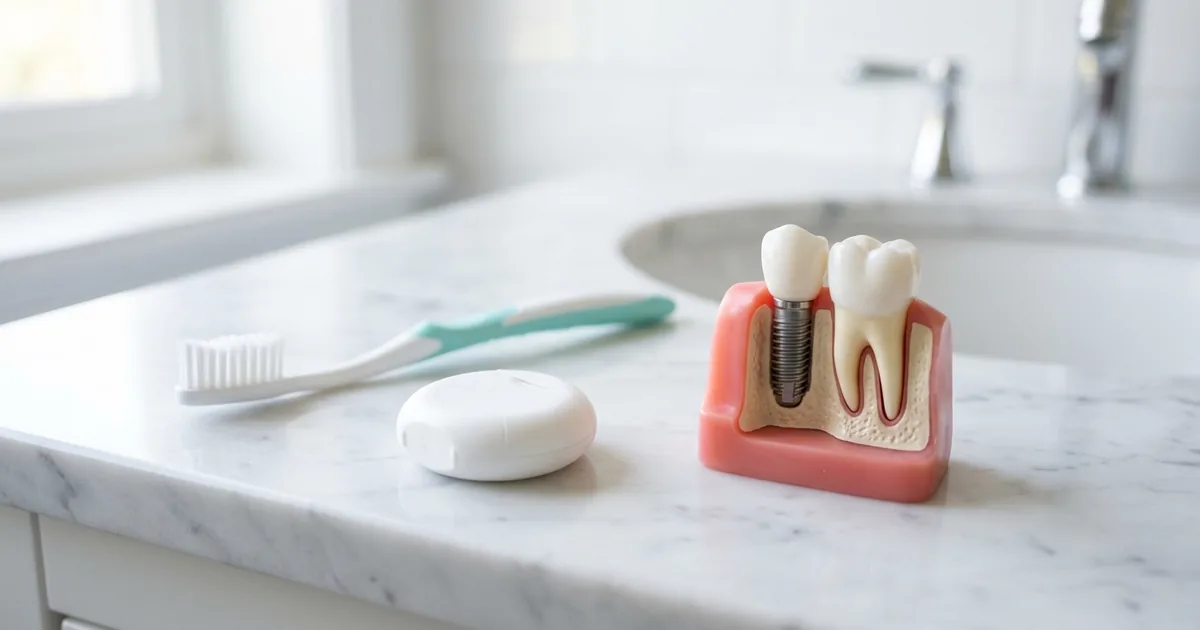
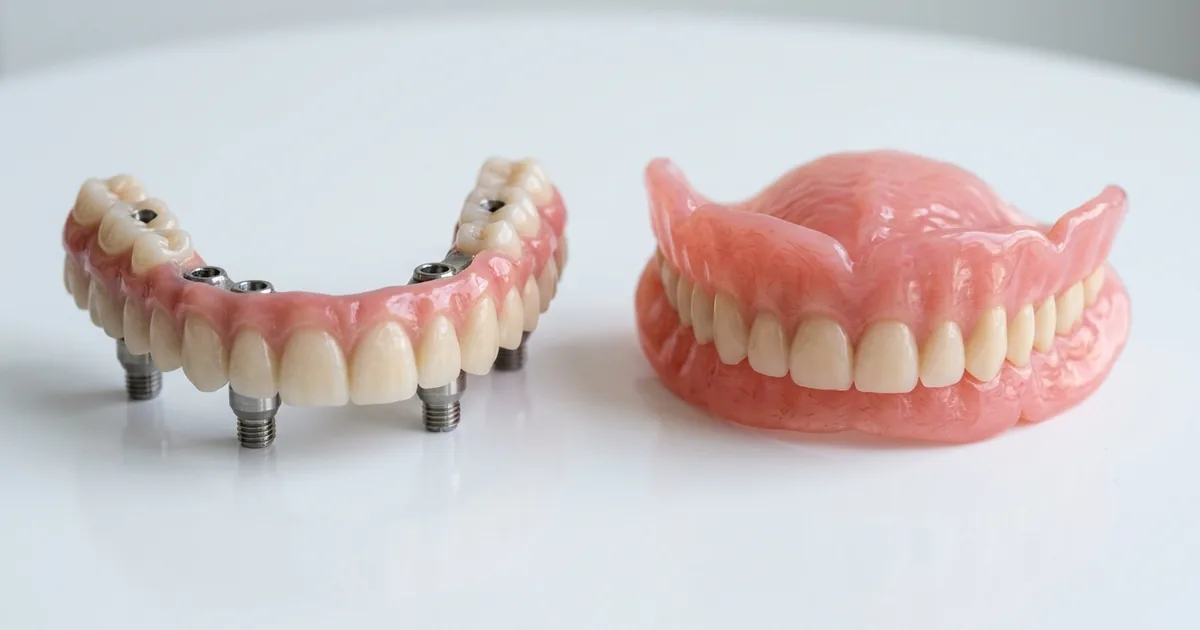
When you are replacing a full arch of teeth, the choice often comes down to fixed teeth on implants, like All-on-4, versus traditional removable dentures. Both restore a smile, but they work in very different ways. Implant supported teeth anchor into your jawbone and stay put, while dentures rest on top of your gums and come out to clean. That difference shapes how they feel, how well you chew, and what happens to your jaw over time. The differences that decide it for most people are below.
| Factor | Fixed teeth on implants | Traditional dentures |
|---|---|---|
| Stays in place? | Yes, anchored in the bone | No, removable, may need adhesive |
| Chewing force | Roughly two to three times a denture | Lowest of the options |
| Jawbone | Stimulates and helps preserve it | Does not stop bone loss |
| Daily care | Brush and floss like natural teeth | Removed to clean |
Fixed versus removable
The most obvious difference is whether the teeth come out. As the Cleveland Clinic describes, traditional dentures rest on your gums and are removable, while implant supported teeth attach to implants anchored in the bone and stay fixed in place. Fixed teeth feel more like your own, with nothing to take out at night or worry about slipping during a meal or a conversation. Dentures are removable by design, which some people prefer, but that also means dealing with adhesives and the chance of movement.
How well each one chews
This is where the gap is biggest. Research comparing bite force found natural teeth chew hardest, implant supported teeth land in the middle, and complete dentures are lowest, with implants delivering roughly two to three times the chewing force of full dentures. In practice that means a much wider range of foods you can eat comfortably with fixed teeth. If being able to bite into the foods you love matters to you, that difference is worth weighing seriously.
What happens to your jawbone
There is a quieter difference that plays out over years. When teeth are gone, the jawbone that supported them begins to shrink, a process called resorption that is fastest in the first few months after tooth loss. Implants are placed into the bone and help keep it stimulated, which supports the jaw over time. Traditional dentures sit on top of the gums and do not provide that same stimulation. This is one of the strongest long-term arguments people make for an implant-based solution.
Are implant supported teeth or dentures better for me?
Neither option is automatically better, because the right choice depends on your jawbone, your health, your priorities, and what feels right to you. Fixed teeth on implants offer stability, stronger chewing, and bone support. Dentures are removable and have their own place. Even if you have lost some bone, that does not necessarily rule out implants, since grafting can rebuild the foundation, which we explain in our post on bone grafting for implants. Our broader comparison of tooth replacement options lays the choices side by side.
One honest conversation usually settles it
Reading about the two options only gets you so far. The decision tends to come clear once Dr. Estrada has looked at your jaw, heard what you actually want from your teeth, and laid out which path fits your situation. No pressure, no steering you toward the pricier route. Just a straight answer you can think over. Our same day teeth page covers the fixed route, and dentures covers the removable one, and a consultation fills in the rest. Call (727) 869-3886 or send a note through the contact page, and we'll set aside time to talk it all the way through.
Frequently Asked Questions
Are implant supported teeth better than dentures?
They are different. Implant supported teeth anchor in the jawbone, stay fixed, chew with roughly two to three times the force of full dentures, and help preserve bone. Dentures rest on the gums and are removable. The right choice depends on your jaw, health, and priorities, which an exam sorts out.
Do dentures cause bone loss?
When teeth are gone, the jawbone naturally shrinks over time, fastest in the first months after tooth loss. Traditional dentures sit on the gums and do not stimulate the bone the way implants do. Implants are placed into the bone and help keep it stimulated, which is a common reason people choose them for the long term.
Can I get implants if I have already lost bone?
Often, yes. Losing some bone does not automatically rule out implants, because bone grafting can rebuild the foundation first. An exam determines how much bone you have and whether grafting is needed, so the only way to know for certain is to be evaluated.
Will fixed teeth on implants feel more natural than dentures?
Most people find they do. Fixed teeth stay in place with nothing to remove, no adhesives, and no slipping during meals or conversation, so they feel more like natural teeth. Dentures are removable by design, which suits some people, but that also means managing movement and adhesives.