Bone grafting rebuilds jawbone so it can support a dental implant when natural bone has shrunk after tooth loss. Dental implants are one of the most reliable ways to replace missing teeth, but an implant is only as stable as the bone holding it. Some patients have lost enough jawbone that there is not a solid foundation for the implant post. That is where bone grafting comes in. A bone graft adds or encourages new bone tissue in the jaw, building back the support an implant needs to last. If you have been told you do not have enough bone for implants, this is the step that often makes them possible again.
Why You Might Need a Bone Graft
The jawbone needs stimulation to stay strong. When a tooth is lost, the bone that used to anchor its root no longer gets that daily pressure from chewing, and it begins to shrink. This is why leaving a gap open for a long time can cause trouble down the road, something we cover in our look at what happens if you do not replace a missing tooth. Gum disease is another common cause, since advanced periodontal disease destroys the bone that holds teeth in place. Injury or trauma to the jaw can do the same. When too much bone is missing, an implant placed into it would not have the grip it needs to heal and hold, so we rebuild the foundation first.
Types of Bone Graft
There is no single kind of bone graft, and the right one depends on how much bone is missing and where. The grafting material itself can come from a few sources. An autograft uses bone taken from another spot in your own body. An allograft uses safely processed donor bone, which is very common and avoids a second surgical site. Synthetic graft material is also widely used and works by giving your own bone a scaffold to grow into. Whichever material is used, the goal is the same: to stimulate your body to build fresh, living bone.
Socket Preservation
When a tooth is removed and an implant is planned for later, Dr. Estrada may place graft material into the empty socket right away. This is called socket preservation, and it helps hold the shape of the bone while it heals so there is more to work with when implant time comes.
Ridge Augmentation
If the ridge of bone has already narrowed or shrunk, ridge augmentation rebuilds its width and height. This is often needed when a tooth has been missing for a while and the bone has had time to recede.
Sinus Lift
For implants in the upper back jaw, the sinus cavity sometimes sits too low, leaving thin bone beneath it. A sinus lift gently raises that sinus floor and adds graft material so an implant has enough bone to anchor into.
What the Procedure Is Like
A bone graft is a routine procedure, and most patients find it far more comfortable than they expected. Dr. Estrada starts by numbing the area thoroughly with local anesthesia, so you should not feel pain while the work is done. If you tend to feel anxious in the chair, sedation options are available to help you stay calm and relaxed. Once the area is numb, the graft material is placed where bone is needed and the site is closed so healing can begin. In many cases the whole thing is over more quickly than people imagine, and you head home the same day with clear aftercare instructions.
Healing and Recovery
The graft itself heals over several months, because your body needs time to grow new bone and weave it together with your existing jawbone. That patience is what makes the implant successful later. In the first few days you may notice mild soreness or swelling, which is normal and usually settles with the pain relievers Dr. Estrada recommends. Stick to soft, cool foods at first, like yogurt, eggs, and smoothies eaten with a spoon, and avoid chewing directly on the graft site. Keep the area clean as instructed, skip smoking, and avoid poking at the spot with your tongue. Once the new bone is strong enough, you will be ready to move forward with your dental implant. We walk through the full implant process in our guide to dental implants.
Graftless Alternatives
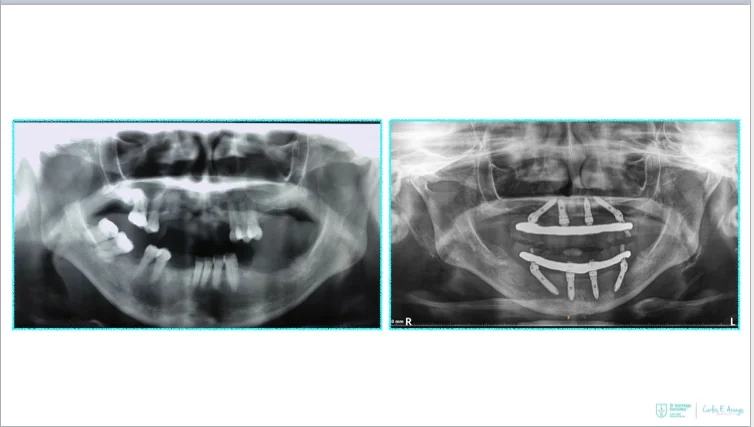
Not everyone with bone loss needs a graft. For patients missing most or all of their teeth, a full arch solution like All-on-4 is often designed to work with the bone you already have. It uses tilted implants placed to take advantage of denser areas of the jaw, which can avoid the need for grafting in many cases. Whether a graft or a graftless approach is right for you comes down to your specific anatomy, and only an exam can tell. We explain these options in more detail in our article for patients with bone loss.
When to See Dr. Estrada
If you have been told you are not a candidate for implants because of bone loss, do not give up on restoring your smile. Modern grafting and full arch techniques mean that even patients with significant bone loss can often move forward. Dr. Estrada will evaluate your jaw with an exam and imaging, then walk you through whether a graft, a graftless option, or a combination fits your case. Every plan is built around what your mouth actually needs. To talk through your options and find out what is possible for you, call Estrada Dentistry at (727) 869-3886. We would be glad to help you take the first step toward dental implants, whether that turns out to be a single tooth implant or a full mouth restoration.
Frequently Asked Questions
Does a bone graft hurt?
The procedure itself is done with anesthesia, so you should not feel pain while it is performed. Afterward, most patients have mild soreness or swelling that is easily managed with the pain relievers Dr. Estrada recommends. It is generally a routine procedure that is more comfortable than people expect.
How long does a bone graft take to heal?
Healing usually takes several months, because the new bone needs time to integrate with your existing jawbone before it can support an implant. The exact timeline varies from person to person. Once the graft is strong enough, Dr. Estrada can move forward with placing your implant.
Do I always need a bone graft before getting implants?
No. Many patients have enough healthy bone and can proceed straight to an implant. A graft is only recommended when there is not enough bone to anchor the post securely. In some cases, graftless options like All-on-4 can work even with significant bone loss, which an exam will help determine.
Where does the bone for a graft come from?
It can come from a few places. Sometimes it is your own bone taken from another spot in your jaw, but more often Dr. Estrada uses safely processed donor bone or a synthetic graft material. Both work by giving your body a scaffold to grow fresh, living bone into. He will explain which option suits your case during your exam.