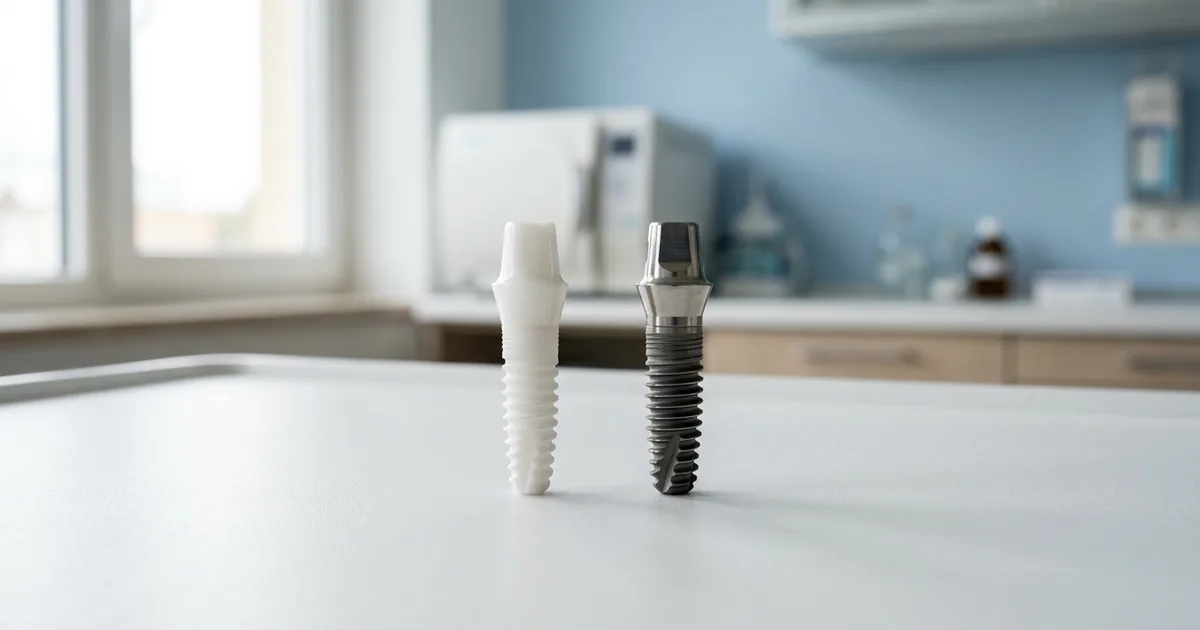
A dental implant is a small titanium post placed in the jawbone that acts as a replacement tooth root, holding a crown, bridge, or denture in place. Unlike dentures or bridges that sit on top of the gums, an implant fuses with the bone, so it looks, feels, and works like a natural tooth. If you are missing teeth and weighing your options, here is how implants work and how to tell whether they are right for you.
How do dental implants work?
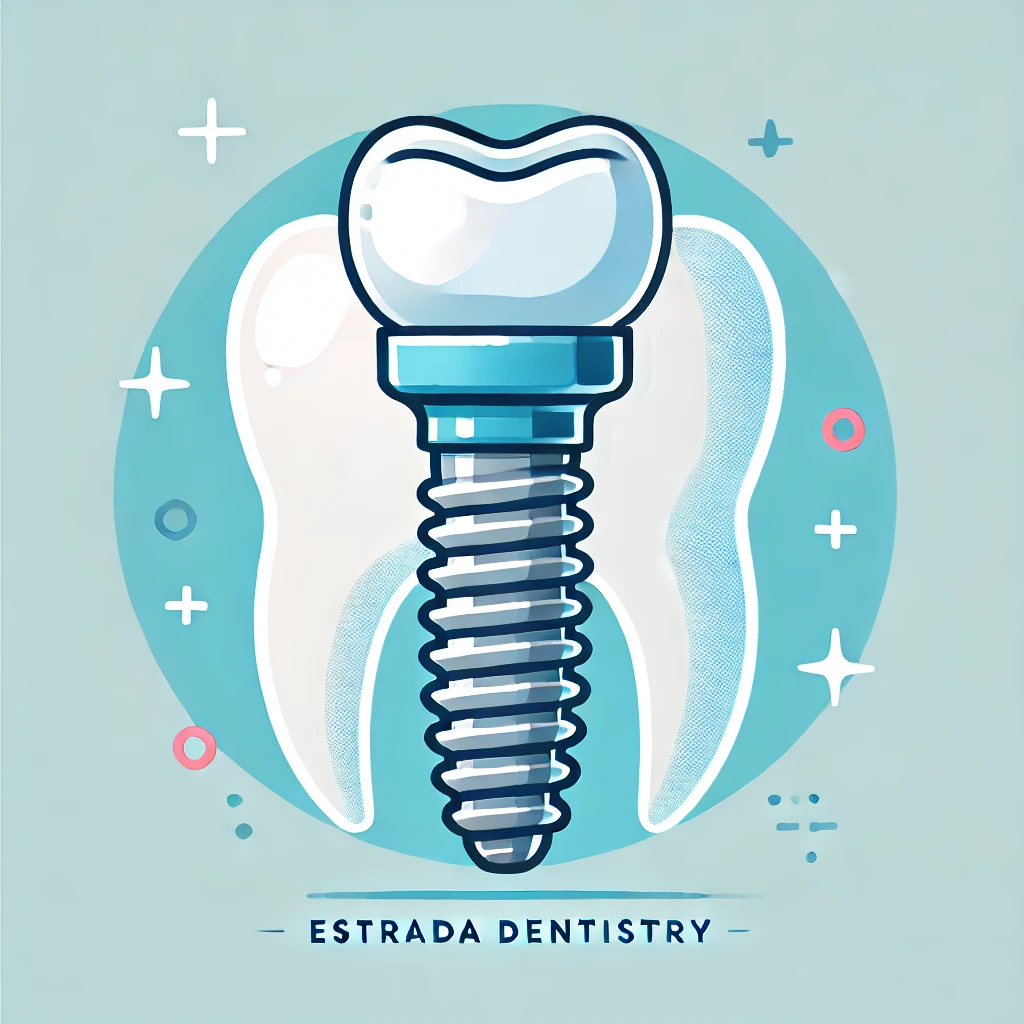
The implant itself is a titanium post that Dr. Estrada places into the jawbone where the tooth root used to be. Over the following months it fuses with the bone in a process called osseointegration, which is what gives the implant its strength. Once it has healed, a custom crown is attached on top, matched to sit naturally against your other teeth. The result is a single replacement tooth that stands on its own without relying on the teeth around it.
Who is a good candidate for dental implants?
Implants work best for people with healthy gums and enough bone to anchor the post. That said, not having enough bone today does not automatically rule you out. When bone has shrunk after tooth loss, a graft can rebuild the area first, and we cover that in our post on bone grafting for implants. The only way to know for certain is an exam, where Dr. Estrada checks your gums, bone, and overall health to confirm the foundation is there.
What are the benefits of dental implants?
The biggest advantage is that implants look, feel, and function like natural teeth. They let you eat, speak, and smile without worrying about anything slipping. Because the post fuses with the bone, an implant also helps prevent the bone loss that follows missing teeth and keeps the shape of your face from changing over time. Implants have a high success rate as well, which the American Academy of Implant Dentistry notes is strongest when the work is done by an experienced provider.
How long do dental implants last?
With good daily care and regular checkups, a dental implant can last a lifetime. The crown on top may eventually show wear and need replacing after many years, but the implant post beneath it is built to stay. Brushing, flossing, and keeping up with your cleanings are what protect that long-term result, the same habits that keep your natural teeth healthy.
Is an implant better than a bridge or denture?
It depends on your situation, but implants offer something the alternatives cannot. A bridge relies on grinding down the healthy teeth on either side of the gap, and a removable denture sits on the gums and can shift. An implant stands alone, protects the neighboring teeth, and preserves the bone underneath. For a fuller side-by-side, see our guide on tooth replacement options compared.
Find out if implants are right for you
The best way to know whether implants fit your needs is a consultation. Dr. Estrada has restored smiles for families across west Pasco County for years. Learn more on our dental implants page, or go straight to the detail on a single tooth implant if that is the gap you are dealing with, then call (727) 869-3886 or request a visit through our contact page.
Frequently Asked Questions
Are dental implants painful?
The procedure is done with local anesthesia, so you should not feel pain while the implant is placed. Most patients describe the recovery as more comfortable than they expected, similar to a tooth extraction, and any soreness afterward is usually managed with over-the-counter pain relievers. If you feel anxious about the appointment, sedation options are available to keep you relaxed.
How long does the dental implant process take?
From start to finish, getting an implant often takes several months, because the post needs time to fuse with the jawbone before the final crown goes on. The appointments themselves are short. Most of the timeline is healing time, which is what makes the result so durable. If a graft is needed first, that adds a few months of healing before the implant is placed.
Can I get implants if I have bone loss?
Often, yes. Bone loss is common after teeth have been missing for a while, and a bone graft can rebuild the area so it can support an implant. Many people who were once told they were not candidates can still move forward after grafting. An exam is what determines whether grafting is needed and whether implants are the right path for you.
How do I care for a dental implant?
You care for an implant just like a natural tooth: brush twice a day, floss daily, and keep up with regular checkups and cleanings. There are no special products required. Good daily habits and routine visits are what protect the implant and the gum and bone around it for the long term.