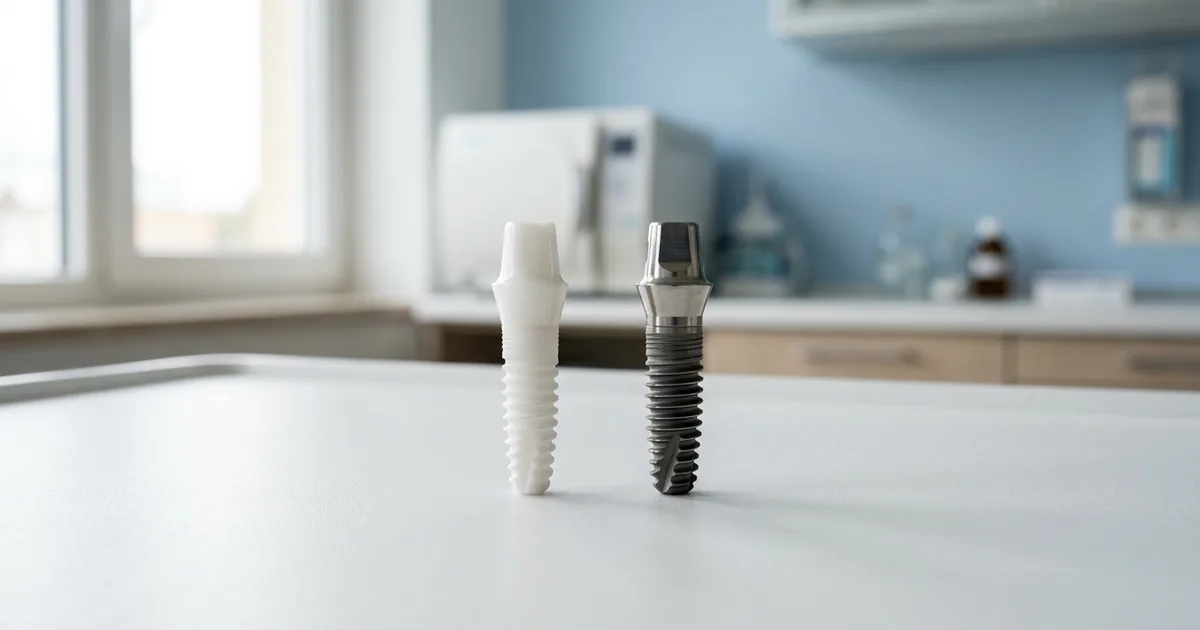
Most dental implants are made of titanium, and they have a long, well-documented track record. Zirconia is a newer, metal-free alternative made from a tooth colored ceramic. Both replace a missing tooth root and anchor a crown, and both fuse to the jawbone in a process called osseointegration. The practical differences come down to material, appearance, and which one fits a particular patient, especially anyone who specifically wants a metal-free mouth. The differences that matter are below, so the choice makes sense before you talk it through with Dr. Estrada.
| Factor | Titanium | Zirconia |
|---|---|---|
| Material | Metal, the decades-long standard | Metal-free white ceramic |
| Appearance | Grey can show through thin gums | Naturally white, no grey shadow |
| Build | Two pieces, flexible crown angling | One or two pieces, newer two-piece options |
| Biocompatibility | High, true allergy rare (about 0.6 percent) | High, no metal, less plaque at the gumline |
| Best for | Most cases, including heavy chewing spots | Metal-free preference, thin gum tissue |
What each implant is made of
Titanium has been the standard implant material for decades because it is strong, lightweight, and the body accepts it readily. A titanium implant is usually two pieces: the post that goes into the bone and a separate abutment that connects to the crown, which gives the dentist flexibility in how the final tooth is angled. Zirconia is a crystalline ceramic, the same family of material used in many tooth colored crowns. It contains no metal at all, and it is naturally white, so there is no grey tint that can sometimes show through thin gums.
How they compare on biocompatibility
This is the question most people who ask about zirconia are really asking. Titanium is highly biocompatible, which is why it has worked so well for so long, and a true titanium allergy is rare. One large study published in Clinical Oral Implants Research found a positive allergy reaction in only about 0.6 percent of implant patients. Zirconia is also highly biocompatible and, being ceramic, carries no concern about metal at all. Research summarized in peer-reviewed dental literature shows zirconia osseointegrates comparably to titanium and tends to attract less bacterial buildup at the gumline. For patients who want a metal-free mouth as a matter of preference, zirconia gives them that without giving up the way an implant works.
Strength and how each is built
Titanium's two-piece design has a long history and handles most cases, including spots in the mouth that take heavy chewing force. Early zirconia implants were made as a single piece, with the post and abutment fused together, which limited how the crown could be positioned. Two-piece zirconia implants now exist and have closed much of that gap. Both materials are strong enough for everyday function. The right pick depends on where the tooth sits, how your bite loads it, and your own priorities, which is exactly what an exam sorts out.
Should I choose a zirconia or titanium implant?
For many patients, titanium remains an excellent, proven choice. Zirconia makes the most sense for someone who specifically wants metal-free care, who has thin gum tissue where a white implant avoids any grey shadow, or who simply prefers a ceramic option. A metal-free implant also fits naturally alongside the other parts of a whole-body approach, which we cover in our post on holistic and biological dentistry. Either way, the foundation matters: if you have lost bone where the tooth used to be, grafting can rebuild it first, something we explain in our guide to bone grafting for implants.
Staying comfortable during implant treatment
Placing an implant is a precise but routine procedure, and you should not have to feel anxious about it. Sedation, from light to deeper levels, keeps you relaxed and comfortable throughout. If nerves have kept you from moving forward, our post on handling dental anxiety with sedation walks through how it works and what to expect.
Which post belongs in your jaw
Getting Dr. Estrada's read takes one call to (727) 869-3886. Titanium or zirconia comes down to your bone, your bite, and what you care about most, and a quick look in your mouth answers it faster than any spec sheet. He'll lay both side by side and tell you which one he'd pick for your situation and why, the practical version, no jargon. The full rundown is on our single tooth implant page, or send a message through the contact page.
Frequently Asked Questions
Are zirconia implants as strong as titanium?
Both are strong enough for everyday chewing. Titanium has the longest track record and a flexible two-piece design. Early zirconia implants were a single piece, but two-piece zirconia now exists and has closed much of that gap. An exam determines which suits where the tooth sits and how your bite loads it.
Why would someone choose a metal-free zirconia implant?
The main reasons are preferring a metal-free mouth, having thin gum tissue where a white ceramic implant avoids any grey shadow, or simply wanting a ceramic option. Zirconia is highly biocompatible and osseointegrates comparably to titanium, so you get those preferences without giving up how an implant functions.
Is a titanium implant allergy common?
No. A true titanium allergy is genuinely rare. One large study in Clinical Oral Implants Research found a positive reaction in only about 0.6 percent of implant patients. Titanium is highly biocompatible, which is why it has been the standard for decades.
Do zirconia implants look more natural?
They can, especially with thin gums. Zirconia is naturally tooth colored, so there is no grey metal tint that can sometimes show through thin tissue at the gumline. The visible crown on top is matched to your other teeth in both cases.