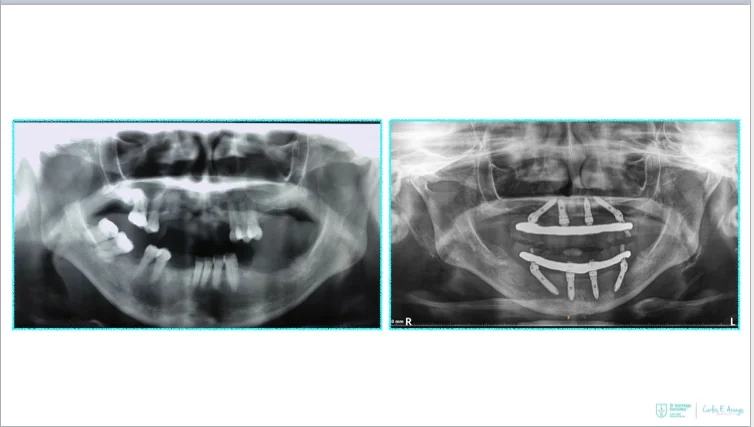

All-on-4 replaces a full row of upper or lower teeth using only four implants, and in many cases you leave with a fixed set of teeth the same day. For someone who has struggled with loose dentures or the loss of most of their teeth, the payoff is concrete: teeth that stay put, food you can chew without planning around it, and a smile that feels like your own again. Whether it fits you comes down to a few specific things.
Why only four implants?
You might expect to need one implant for every missing tooth. You do not. The four implants in an All-on-4 are placed at specific angles, with the two back ones tilted to take advantage of the bone you already have. Those four posts spread the pressure of biting and chewing across the whole arch, which is enough to hold a full bridge of teeth securely in place.
That tilted placement is the clever part. Because it uses existing bone, most patients avoid the separate bone grafting step that traditional implants sometimes require, which shortens the overall timeline.
What it gives you back
The real story of All-on-4 is the difference it makes day to day. Because the teeth are fixed to implants rather than resting on your gums, they do not slip, click, or come loose the way dentures can. You can bite into the foods you have been avoiding, talk and laugh without worrying about anything moving, and skip the adhesives and overnight soaking. Like single implants, the posts also stimulate the jawbone, which helps preserve your facial structure over time. Many patients describe it as getting their confidence and their normal life back. We cover the broader advantages in our post on the benefits of dental implants.
Who is a good candidate?
All-on-4 was designed in part for people who were told they do not have enough bone for regular implants. Because of the tilted placement, many patients who could not get traditional implants can still get this. You may be a good fit if:
- You are missing most or all of the teeth in one or both arches.
- You wear dentures and are tired of them slipping or coming out.
- You have some bone loss but not so much that there is nothing to anchor to.
- You are in reasonable general health and your gums are healthy enough for surgery.
If you have struggled with loose dentures or were turned away for implants because of bone loss, this is worth asking about. Our post on solutions for bone loss goes deeper on that.
What the day actually looks like
Patients are often unsure how everything fits into a single day, so this is the rough order of events. You arrive, and any remaining teeth that need to come out are removed. Sedation keeps you comfortable through the whole thing. Dr. Estrada places the four implants. Then a temporary fixed set of teeth is attached to those implants before you go home. You head out with teeth, not gaps.
Over the next few months, the implants fuse with your jawbone. Once that healing is done, the temporary set is swapped for your permanent teeth. From that point you care for them much like natural teeth.
Recovery and living with All-on-4
Expect some swelling and soreness for the first several days, managed with the aftercare instructions we send home with you. Soft foods at first, then back to normal eating as you heal. The big difference patients notice is that the teeth do not move. You can bite into food and talk without worrying about anything shifting.
For comfort during the procedure, we offer several sedation options, so anxiety about the surgery should not be the thing that holds you back.
Could All-on-4 work for your mouth?
For the right patient, four implants can carry a full row of teeth and bring back real chewing. Whether you're that patient comes down to a scan and an exam, nothing you can settle from a webpage. Dr. Estrada reads your bone, your gums, and what you want from the result, then gives you a straight yes, no, or here's-what-we'd-do-first. The full mouth dental implants page has the background, and All-on-4 across Pasco County covers where the surgery happens. To sit down with him at the Hudson or Port Richey office, call (727) 869-3886.
Frequently Asked Questions
Why does All-on-4 only use four implants?
The four implants are placed at specific angles, with the back two tilted to use the bone you already have. Those four posts spread the force of biting across the whole arch, which is enough to hold a full bridge of teeth securely in place.
Can I really get teeth the same day?
In many cases, yes. After the implants are placed, a temporary fixed set of teeth is attached the same day, so you leave with teeth instead of gaps. Over the next few months the implants fuse with your jaw, then the temporary set is swapped for your permanent teeth.
Am I a candidate if I was told I do not have enough bone?
You may well be. All-on-4 was designed in part for people turned away for traditional implants because of bone loss. The tilted placement uses existing bone, so many patients avoid a separate graft. An exam and scan confirm whether it fits your case.
What is recovery like after All-on-4?
Expect some swelling and soreness for the first several days, managed with the aftercare instructions we send home. You start with soft foods and ease back to normal eating as you heal. The big difference patients notice is that the teeth stay put.