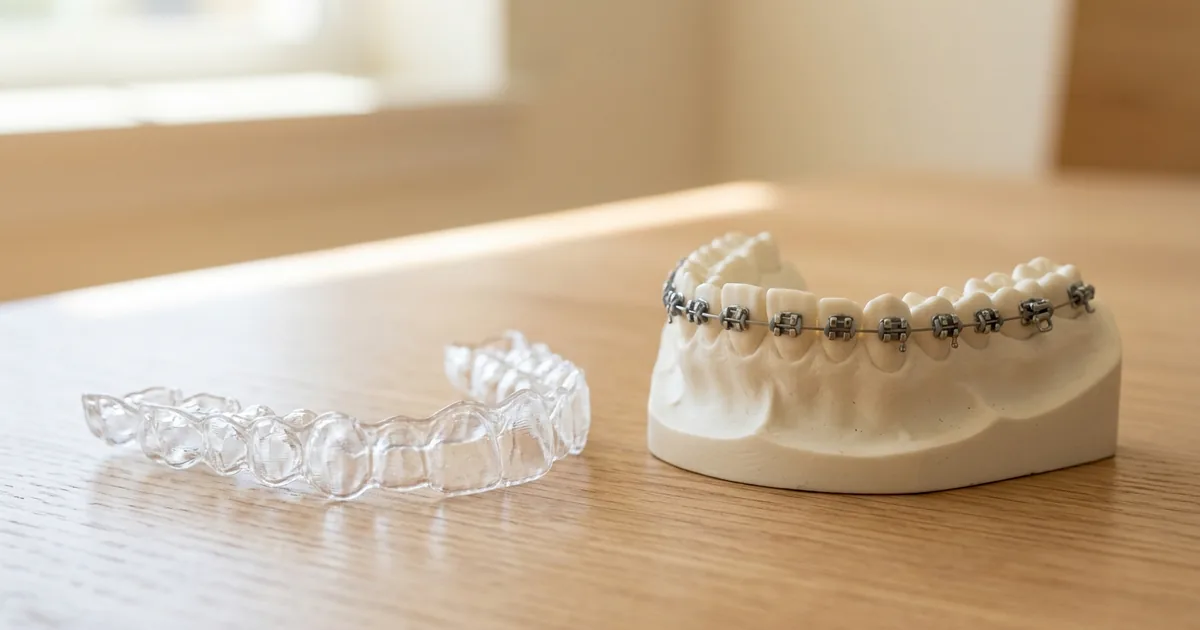
Invisalign and braces both move teeth into better alignment, but they do it differently and suit different people. Invisalign uses a series of clear, removable aligners that are nearly invisible and let you eat and brush normally, and it works best for mild to moderate alignment issues in patients who will wear them consistently. Braces are fixed to the teeth and can correct more complex cases, including significant bite problems, without depending on you to keep them in. The right choice comes down to your specific teeth, your lifestyle, and how involved your case is.
| Factor | Invisalign | Braces |
|---|---|---|
| Appearance | Clear and nearly invisible | Visible, though smaller than before |
| Removable? | Yes, taken out to eat and clean | No, fixed to the teeth |
| Best for | Mild to moderate alignment issues | More complex cases and bite correction |
| Eating | Nothing off-limits | Avoid sticky and hard foods |
| Relies on you | Only works if worn about 22 hours a day | Works without you remembering |
How each one works
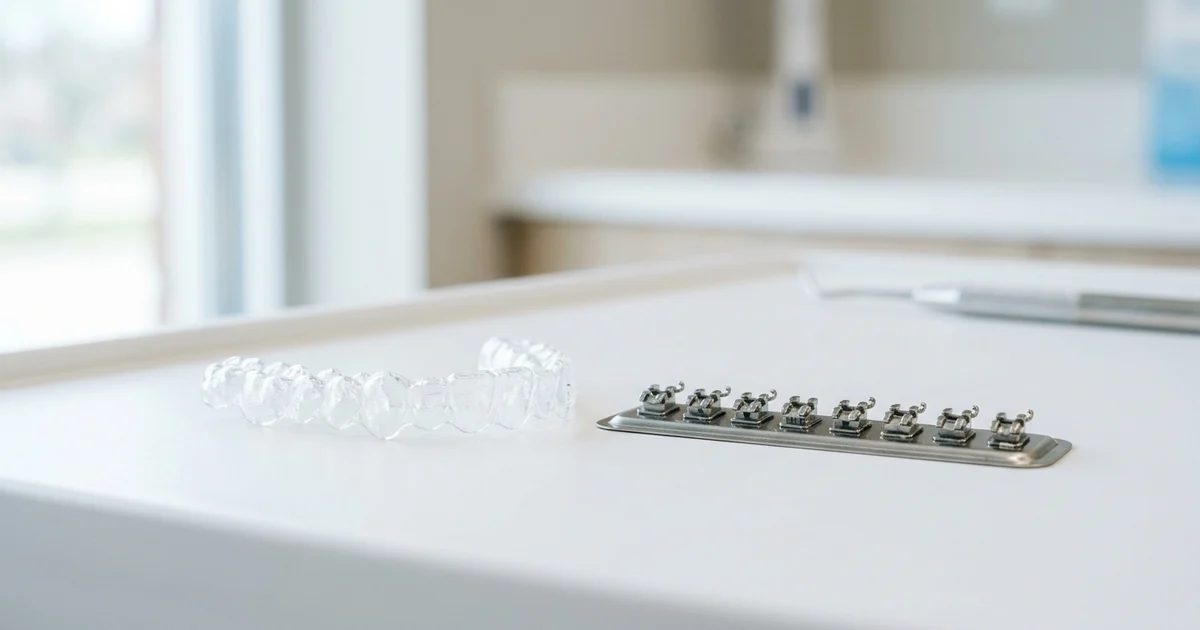
Braces use small brackets bonded to your teeth, connected by a wire that is adjusted over time to guide the teeth into place. They are always working because they are fixed on. Invisalign instead uses a set of custom clear aligners that you switch out every couple of weeks, each one nudging your teeth a little closer to the goal. You wear them around 22 hours a day and take them out to eat and clean your teeth.
Appearance and comfort
For a lot of adults and teens, the look is the deciding factor. Invisalign aligners are clear and sit close to the teeth, so most people will not notice them, which is a big draw if you would rather not have a mouth full of metal. They also tend to be more comfortable, with no brackets or wires to irritate your cheeks. Braces are more visible, though today's options are smaller and less obvious than they used to be, and they can rub a bit, especially after an adjustment.
Which problems each handles best
This is where they genuinely differ. Invisalign is excellent for mild to moderate crowding, spacing, and many common alignment issues. Braces have an edge with more complex situations, including significant bite corrections and teeth that need substantial rotation or movement. During an exam, Dr. Estrada can tell you which your case calls for, and sometimes either would work and it really does come down to your preference.
Lifestyle and responsibility
- Eating. With Invisalign you take the aligners out to eat, so nothing is off-limits. With braces you avoid sticky and hard foods that can damage them.
- Cleaning. Invisalign lets you brush and floss normally. Braces take more effort to clean around the brackets and wires.
- Discipline. Invisalign only works if you actually wear the aligners enough each day. Braces do not depend on you remembering, which can make them the better fit for kids or anyone who would struggle with the routine.
- Visits. Both need periodic checkups so progress stays on track.
Is Invisalign or braces better for my case?
The right choice depends on how complex your case is and how long treatment runs, and the two options sit closer together than most people expect. The most useful thing you can do is get an evaluation so you know what your own case actually involves before you start comparing. We will go over the practical details with you directly, including cost and financing, so nothing about the decision feels like a guess.
Let your bite settle the debate
Clear aligners win for some bites and brackets win for others, and no article can tell you which is yours without seeing your actual teeth. Start with our pages on clear aligners and braces, then bring your questions in. Dr. Estrada will check the bite, lay out what'll genuinely work for your case, and weigh it against how you live before you decide together. Straightening is often one piece of a broader smile makeover too. Call (727) 869-3886 or book through the contact page.
Frequently Asked Questions
Is Invisalign as effective as braces?
For mild to moderate alignment issues, Invisalign works very well, provided you wear the aligners consistently. Braces have an edge with more complex cases, including significant bite corrections and teeth that need substantial rotation, since they are fixed on and always working.
Which is more comfortable, Invisalign or braces?
Invisalign aligners tend to be more comfortable, with no brackets or wires to irritate your cheeks, and they are nearly invisible. Braces are more visible and can rub a bit, especially after an adjustment, though today's options are smaller than they used to be.
Can I eat normally with Invisalign?
Yes. You take the aligners out to eat, so nothing is off-limits, and you put them back in afterward. With braces, you avoid sticky and hard foods that can damage the brackets and wires.
Which option is better for kids?
Braces can be the better fit for children or anyone who would struggle with the routine, because they do not depend on remembering to wear them. Invisalign only works if the aligners are worn around 22 hours a day, which takes discipline.