Both options hold your teeth with implants. The difference is what you live with every day. A snap-in denture comes out for cleaning and sleeping and can be adjusted or relined, while fixed implant teeth stay in and are cleaned in place like natural teeth. The better choice depends on your hands, your habits, your gums and bone, and how you feel about something removable, more than on anything else.
What is the daily difference between snap-in and fixed implant teeth?
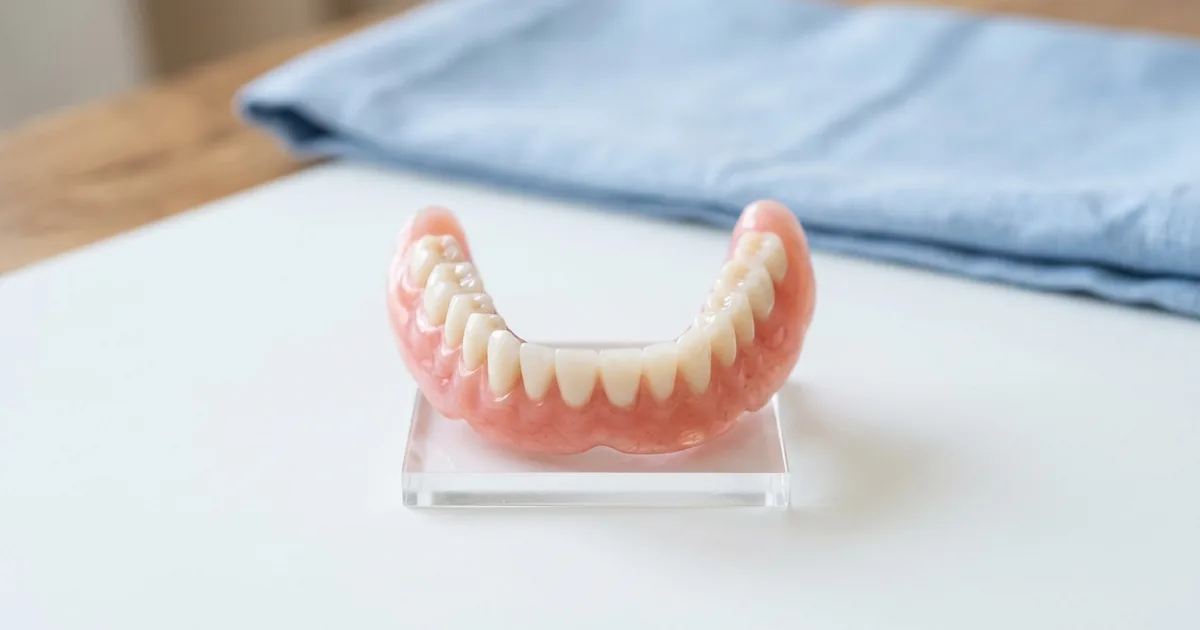
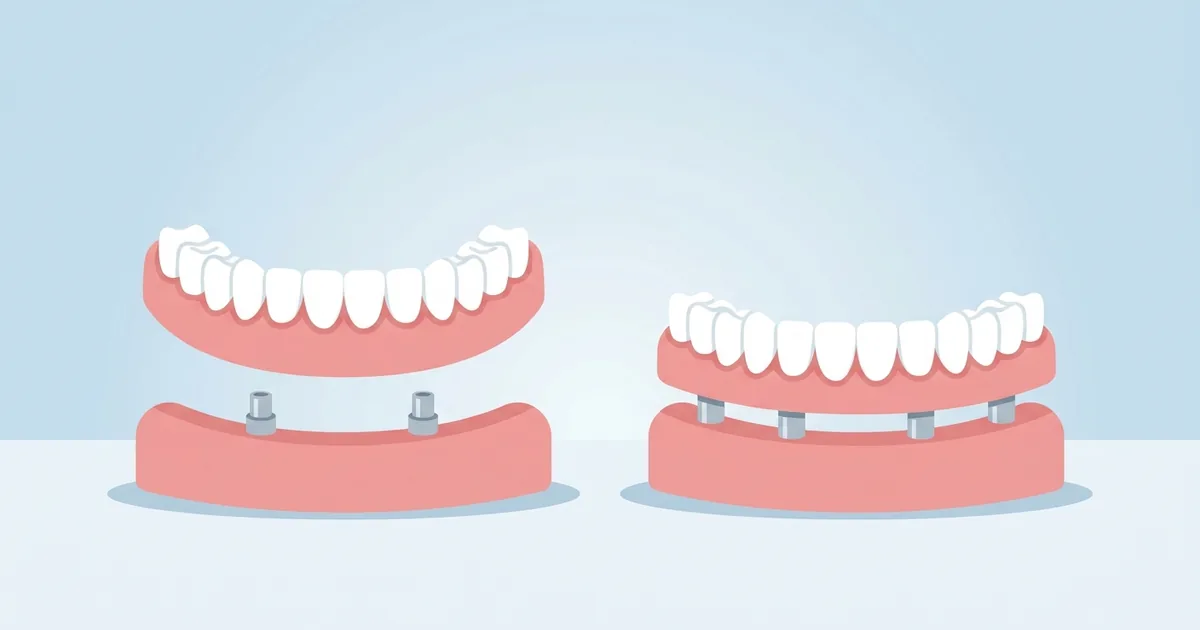
A snap-in denture is a removable denture with small attachments on its underside that clip onto a small number of implants. It stays put while you eat and talk, and it comes off with a firm pull at night. Fixed implant teeth are a full arch screwed to a set of implants, and only the dentist takes them off.
Our implant supported dentures page explains how the attachments work, so here the question is how each one fits a normal day. Neither is the lesser option. They suit different people, and the same mouth can often take either, which is why the decision usually comes down to habits.
A snap-in has a routine like a pair of glasses. It goes in each morning, comes out at night and gets cleaned on the counter. With fixed teeth, the routine is the one you had with natural teeth, with a few extra minutes of cleaning underneath. People who liked the simplicity of a denture often prefer the first. People who never got used to the idea of removable teeth usually prefer the second.
Which is easier to keep clean, snap-in or fixed?
A snap-in comes out, gets brushed like any denture, and soaks overnight, while the implant attachments in the mouth are brushed in a minute. Fixed teeth are cleaned in place. You brush, then clean under the bridge every day with floss threaders, a water flosser or small interdental brushes, because food collects beneath an arch that never comes out.
Both routines work, one at the sink with the teeth in your hand and the other in the mouth with tools. Our guide to daily care for dental implants covers the tools for the fixed routine.
What if my hands are not what they were?
For many older patients this is the question that decides it. Cleaning under a fixed arch takes steady hands and a good view in the mirror. Taking a snap-in out and brushing it on the counter takes less dexterity, and a spouse or caregiver can do it easily if that day comes.
Some people with arthritis, though, find the snap-in attachments hard to pull free and prefer teeth that stay in. At the consult we ask who will be doing the cleaning in five years, because that answer matters most.
How do they feel when you eat and talk?
A fixed arch has no palate and far less bulk than a denture, so it feels closest to natural teeth, and in our experience most people stop noticing it within weeks. A snap-in upper can be made with much less palate than a conventional denture, because the implants carry the retention. That helps with taste and gagging, but it still has a base and a little bulk. If gagging pushed you toward implants, the post on options for a denture that makes you gag lists the adjustments worth trying first.
Chewing with either is steadier than with a denture held by suction alone, and both let you bite into food a loose lower never would. Speech settles quickly with both, since neither moves when you talk, though a snap-in upper with a reduced palate can take a few days of practice with s and f sounds. For the fixed option measured against a conventional denture, read same day teeth compared with traditional dentures.
What wears out and what gets repaired?
Any snap-in denture or fixed set, from any office, has maintenance built in. The small nylon inserts inside snap-in attachments wear and are swapped at routine visits, the denture itself can be relined as the gums change, and a cracked base is repaired like any denture.
Fixed teeth are checked at routine visits, the screws are tightened on a schedule, and the dentist can remove the whole arch for cleaning or repair, which goes to the lab. That difference matters for a snowbird here half the year. A snap-in insert can be swapped at any dental office, while fixed-arch maintenance is best done where the arch was made.
Which one fits your situation?
Which one fits depends on how your day runs, and this table is the one Dr. Estrada uses at the consult.
| Your day | Snap-in denture | Fixed implant teeth |
|---|---|---|
| Cleaning at home | Out, brushed at the sink, soaked overnight | Brushed and cleaned underneath in the mouth, daily |
| Dexterity or a caregiver | Easy for a helper to clean. Clips can be stiff to pull. | Needs steady hands and a mirror. Nothing to remove. |
| Palate and taste | Reduced palate on an upper, some bulk | No palate, feels most like natural teeth |
| Sleeping | Comes out at night | Stays in |
| Eating feel | Steady, with a little movement | Solid, bite into food directly |
| Maintenance visits | Insert swaps and relines, done chairside | Checks and screw tightening. Repairs go to the lab. |
| Bone and gum needs | Fewer implants, works with less bone | More implants, planned on the 3D scan |
How is the decision made at the consult?
Dr. Estrada looks at bone volume on a 3D scan, gum health, how many natural teeth remain and your health history, because those set what is possible before preference comes into it. The timelines also differ. Implant supported dentures are not usually a single-day process, because the implants need time to fuse with the bone before they can carry a denture. Same Day Teeth are fitted with a temporary set the same day.
Dr. Estrada plans and places both in-house, with decades of implant work behind him. Whether an existing denture can be fitted with attachments or a new one is made is decided at the exam. If a loose lower is what brought you here, our post on why a lower denture will not stay in place explains the anatomy behind it. For the age question, dental implants for seniors answers it directly.
The number of implants, the materials, the lab work and the number of visits shape the cost. We accept PPO insurance and Medicare, and we offer CareCredit financing so treatment can be paid over time. The consultation maps the plan before anything is scheduled.
Which one will you clean well and live with?
Snap-in and fixed teeth both solve the problem of a denture that moves. The right one is the one you will clean well and feel at ease with for the next decade. Call (727) 869-3886 or use our contact page to book a consultation and bring your questions, including who will help with cleaning. This article is general information, not a diagnosis. The exam shows what your mouth can support.
Frequently Asked Questions
Can I switch from a snap-in denture to fixed teeth later?
Often, yes, if the bone can take the extra implants a fixed arch needs. Some patients start with a snap-in and add implants later for a fixed set, if the first implants were placed with that in mind. The reverse, going from fixed to snap-in, is less common but also possible.
Do snap-in dentures come out at night?
Yes. Like any denture, a snap-in should be taken out overnight so the gums rest and the denture can be cleaned and soaked, which the American Dental Association also advises, and the implant attachments in the mouth are brushed before bed. Fixed implant teeth stay in around the clock and are cleaned in place before sleep.
Can I have a snap-in lower and keep my natural upper teeth?
Yes, and it is a common combination. A loose lower is the usual complaint, so implants with a snap-in lower against healthy natural upper teeth solve the problem that exists without touching the arch that is fine. The bite is checked so the natural teeth and the denture wear evenly.
Which option is easier for someone who cannot see or feel well enough to clean carefully?
Usually the snap-in, because it comes out and can be cleaned at the sink by the wearer or by a helper, and the implant attachments are easy to reach. A fixed arch needs daily cleaning underneath it in the mouth, which is hard to do well without good vision and steady hands. The consult covers who will be helping and plans around that.