A pimple-like bump on the gum is usually a gum boil, especially one near the root of a tooth that fills, drains and comes back. It is the opening of a small drainage channel from an infection inside or beside a tooth, and it often does not hurt because it is draining, so people ignore it for months. Do not pop, squeeze or try to drain it. An X-ray finds the tooth feeding it, and the fix is usually a root canal or, less often, gum treatment or an extraction.
What is a pimple on the gum, and why is it called a gum boil?
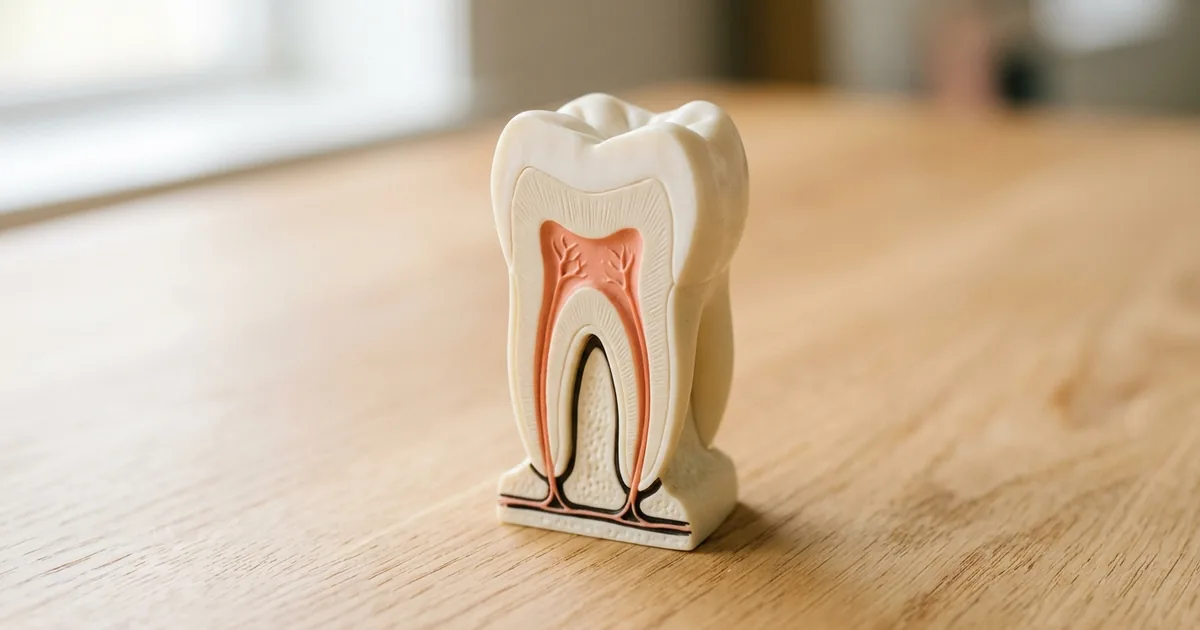
Cleveland Clinic's health library entry on gum boils describes a gum boil, also called a parulis, as a small bump where pus finds its way out through the gum. The pus comes from an infection inside a tooth or in a deep gum pocket. The infection makes a tunnel through the bone, and the bump is the exit. So it swells as pressure builds, drains with a salty or bad taste, flattens for a few days, then refills.
A sore heals and stays gone. A gum boil comes back, because the source is still there. The tooth that feeds it usually needs root canal treatment, which removes the infected nerve tissue and closes the channel from the inside.
Occasionally a boil bursts all at once, with a rush of foul-tasting fluid and sudden relief that is not a cure. See tooth abscess pain at night and when to get help, or, if yours has burst, what happens after a tooth abscess bursts.
Why is a gum boil often painless?
Pain from a tooth infection comes from pressure trapped inside bone with nowhere to go. A gum boil is a pressure release, so the ache that would otherwise build never arrives. Painless does not mean harmless. The infection is still working on the bone around the root, and the longer it goes on, the more bone it can cost, so we would rather see it early. A painless bump that has been there for weeks is one we want to see soon.
Is it a gum boil or something else?
Several things look like a pimple on the gum.
| What it is | Where it sits | Behavior | What to do |
|---|---|---|---|
| Gum boil | Over the root of one tooth. Often a filled, crowned or cracked tooth. | Drains with a salty or bad taste. Refills in the same spot. | Exam and X-ray this week |
| Canker sore | Loose gum, inside the lip or cheek, under the tongue | Open sore, pale center, red rim. Heals in 1 to 2 weeks, next one elsewhere. | Leave it. Mention it if frequent or past 2 weeks |
| Denture or clasp irritation | Denture edge or under a partial clasp | Looks raw but does not drain. Settles with the denture out, returns when it rubs. | A quick adjustment visit |
| Bony bump (torus) | Hard. Roof of mouth or inside lower jaw. | Does not drain. Changes little, if at all, over years. | Nothing, unless it interferes with a denture |
| Small cyst or growth | Anywhere on the gum, firm or soft | Usually does not drain. Slowly grows instead of coming and going. | An exam. Anything that grows gets looked at |
Gum abscess or tooth abscess?
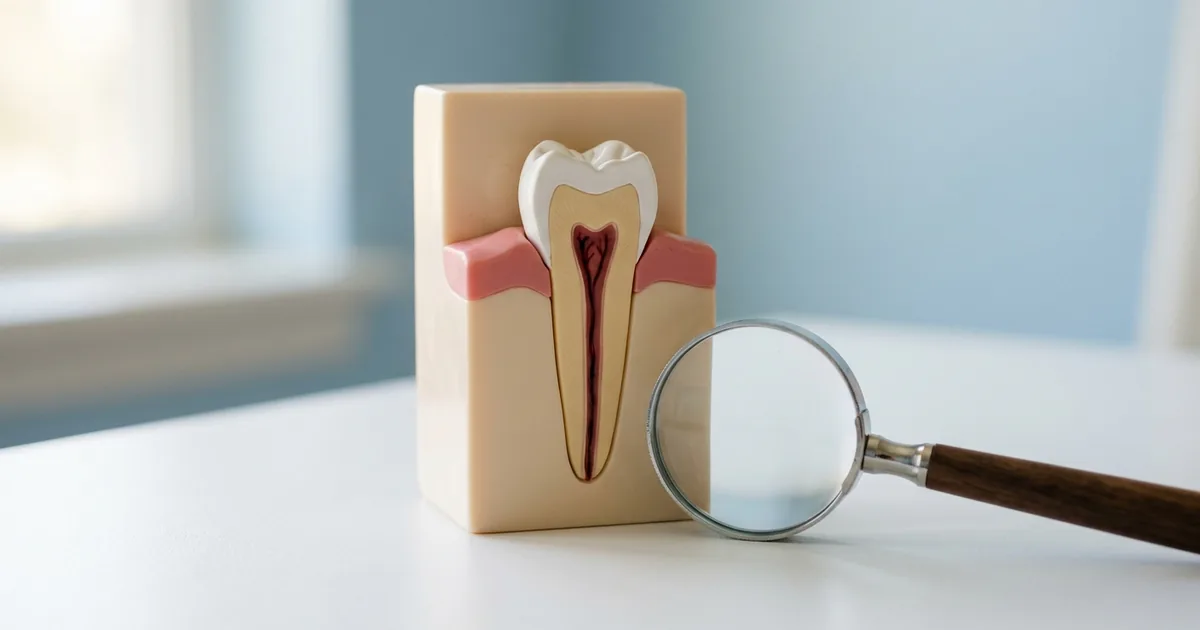
Two infections can make the same bump. One close to the gumline, beside a tooth with a deep pocket, usually comes from gum disease and is treated by cleaning the pocket. One higher up, over the tip of the root, usually means the nerve inside has died, including on a front tooth that took a knock years ago, and that one is a root canal case. An X-ray and a gum measurement help tell the two apart, and our post on gum recession and deep pockets covers how pockets form.
What should I do about the bump tonight?
Rinse gently with warm salt water a few times a day, eat soft food on the other side, and keep your hands off it. Do not squeeze, pop or lance it, and do not take leftover antibiotics or anyone else's. An antibiotic can quiet the bump for a while without touching the tooth that feeds it.
For any ache, an over-the-counter pain reliever you already know is safe for you, taken as the label directs, is the right starting point. Check with your doctor or pharmacist first if you take a blood thinner, have kidney, liver or stomach problems, or are pregnant.
A few signs mean the hospital first:
- trouble breathing or swallowing
- swelling that reaches the eye, spreads down the neck or under the jaw
- fever with facial swelling
- cannot open the mouth
- bleeding that will not stop with firm pressure
- confusion, rapid heartbeat, or feeling very unwell
- a knocked or loose tooth after a blow to the head with any loss of consciousness
Those mean the emergency room or 911 now, then call the office so the tooth itself gets treated. For anything short of that list, our emergency dental care page explains how urgent visits are handled.
What will the dentist do about it?
The visit starts with an X-ray of the area, which usually shows the dark shadow of infection at the root tip or beside the pocket and tells us which tooth is the source. A cold test or a gentle tap on the suspect tooth helps show whether the nerve inside is still alive. That same test is how we sort out a toothache that went away on its own.
From there the plan is usually a root canal, done in-house, and our post on what a root canal visit is like walks through the appointment. If the source is a deep gum pocket, the pocket is cleaned and treated instead. If the tooth is cracked through or too broken down to save, extraction is the right answer, and we say so before anything starts.
We are open Monday through Friday, 9:00 AM to 5:30 PM. Outside those hours, leave a message, and urgent calls are returned first thing. A bump that drains is not usually a same-day emergency, but it should be seen this week. A swollen cheek alongside the bump moves it up the list, and our guide to what a swollen face from a toothache means explains why.
What should I do if the bump keeps coming back?
A bump that refills is the end of a channel from a tooth that needs treatment, so have it looked at instead of waiting for it to flatten again. Call (727) 869-3886 or use our contact page to book an X-ray this week. This article is general information, not a diagnosis. The exam shows which tooth is involved and what it needs.
Frequently Asked Questions
Can a gum boil go away for good without treatment?
The bump can flatten for days or weeks at a time, but it keeps returning as long as the infection inside the tooth or pocket is there, and the bone around the root keeps thinning in the meantime. Treating the source, usually with a root canal, is what closes the channel.
Does a gum boil always mean the tooth has to be pulled?
No. Many teeth that cause a gum boil can be saved with a root canal, which removes the infected nerve and seals the inside of the tooth. Extraction comes into it when the tooth is cracked through the root or too broken down to rebuild, which the X-ray and exam show before any decision is made.
Is a gum boil contagious or something I can spread by kissing?
No. A gum boil is the drain for an infection sealed inside your own tooth or gum pocket, so it is not passed to another person. The bacteria involved are ordinary mouth bacteria that everyone carries. The important thing is to treat the tooth that feeds it, because the infection keeps working on the bone around the root in the meantime.
Can a child get a gum boil on a baby tooth?
Yes. A baby tooth with deep decay or an old injury can develop one, often with little or no pain, and it deserves a visit because the infection sits close to the adult tooth forming underneath. The treatment is decided by how long the baby tooth has left before it would fall out naturally.