A root canal is a treatment that saves a tooth when the soft tissue inside it, the pulp, becomes infected or inflamed. Dr. Estrada numbs the area, removes the infected tissue, cleans and seals the inside of the tooth, and usually finishes it with a crown to protect it. With modern numbing, the procedure itself feels a lot like getting a filling, and far from causing pain, it is what relieves the severe pain an infected tooth was giving you. Most people are back to normal within a day or two.
Why a tooth needs a root canal
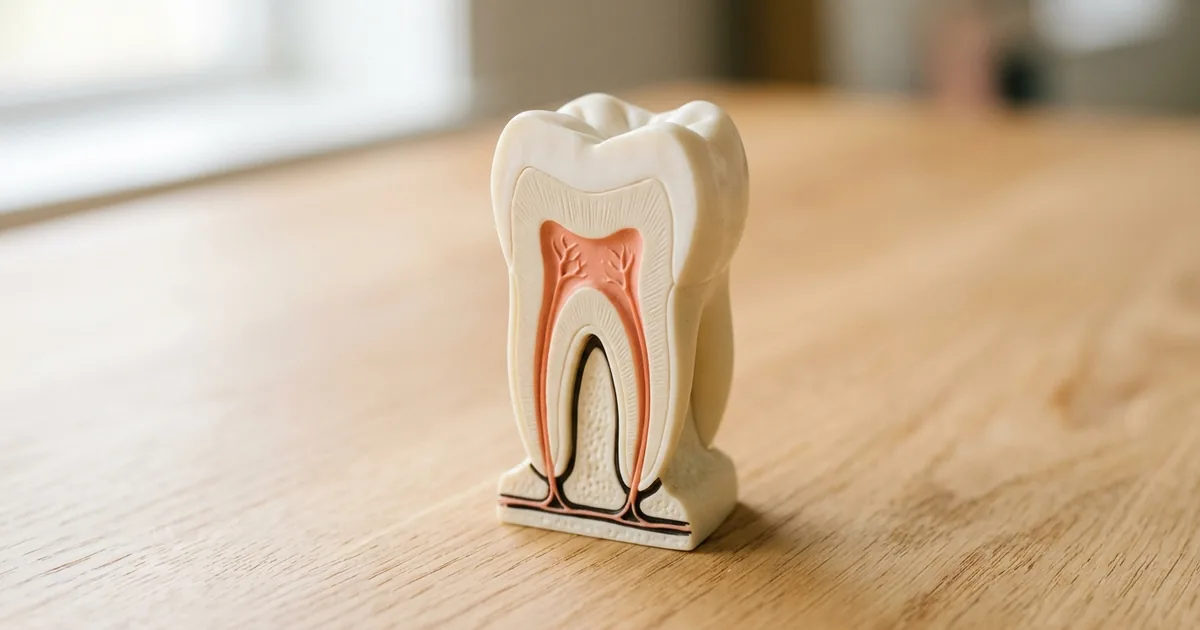
Inside every tooth is a soft core of nerves and blood vessels called the pulp. When a deep cavity, a crack, or repeated dental work lets bacteria reach that pulp, it gets infected and inflamed. That is what causes the kind of deep, throbbing pain people fear, and often a tooth abscess. A root canal removes that infected tissue so the tooth can stay in your mouth instead of being pulled. Saving your natural tooth is almost always better than losing it.
Does a root canal hurt?
This is the question everyone asks, so let us be straight about it. The reputation comes from a time before modern anesthesia. Today the area is thoroughly numbed, and the procedure itself feels much like having a filling done. The pain people associate with root canals is really the pain of the infection beforehand, and the root canal is what ends it. If the thought still makes you tense, that is completely normal, and our sedation options let you stay relaxed from start to finish. The procedure itself is covered on our root canals page.
What happens during the procedure
- Numbing. Dr. Estrada fully numbs the tooth and the area around it so you are comfortable before anything begins.
- Access. A small opening is made in the top of the tooth to reach the pulp inside.
- Cleaning. The infected and inflamed tissue is removed, and the inside of the tooth is carefully cleaned and shaped.
- Sealing. The cleaned space is filled and sealed to keep bacteria out.
- Protecting. Because a treated tooth becomes more brittle, it is usually capped with a crown so it can handle normal biting again. Our post on what a dental crown does explains that step.
What recovery is like
Most people go back to their normal day right after, though it is wise to wait until the numbness wears off before eating. The tooth and gum may feel tender for a few days, which is easily managed with over-the-counter pain relief. Chew on the other side until any final crown is placed, and keep up your normal brushing and flossing. Serious complications are uncommon, but call us if you have severe pain, swelling, or the bite feels off after a few days.
Saving the tooth versus pulling it
Sometimes people ask why not just pull the tooth. An extraction is quicker in the moment, but losing a tooth creates new problems: the teeth around it can drift, the bone beneath can shrink, and you then face replacing it. Our post on what happens if you do not replace a missing tooth covers why. When a tooth can be saved, keeping your own is usually the better long-term choice.
That ache won't fix itself
An infected tooth only gets louder the longer you leave it, and the throbbing you're feeling now is the easiest version of this you'll get. Call us at (727) 869-3886 and tell whoever answers what hurts. Dr. Estrada will find the source, show you what he sees, and if a root canal is the answer, he'll get you out of pain gently. If it's already keeping you up at night, our emergency dental care page tells you how same day visits work, or message us through the contact page. Sooner is kinder.
Frequently Asked Questions
Does a root canal hurt?
Not the way its reputation suggests. The area is thoroughly numbed, and the procedure itself feels much like having a filling done. The pain people associate with root canals is really the pain of the infection beforehand, and the root canal is what ends it.
How long does recovery from a root canal take?
Most people head straight back into their day and only need to wait for the numbness to fade before eating. Any tenderness in the tooth or gum usually settles within a few days and responds well to over-the-counter pain relief.
Why do I need a crown after a root canal?
A treated tooth becomes more brittle, so it is usually capped with a crown to protect it so it can handle normal biting again. Our post on what a dental crown does explains that step.
Why not just pull the tooth instead?
An extraction is quicker in the moment, but losing a tooth creates new problems: the teeth around it can drift, the bone beneath can shrink, and you then face replacing it. When a tooth can be saved, keeping your own is usually the better long-term choice.