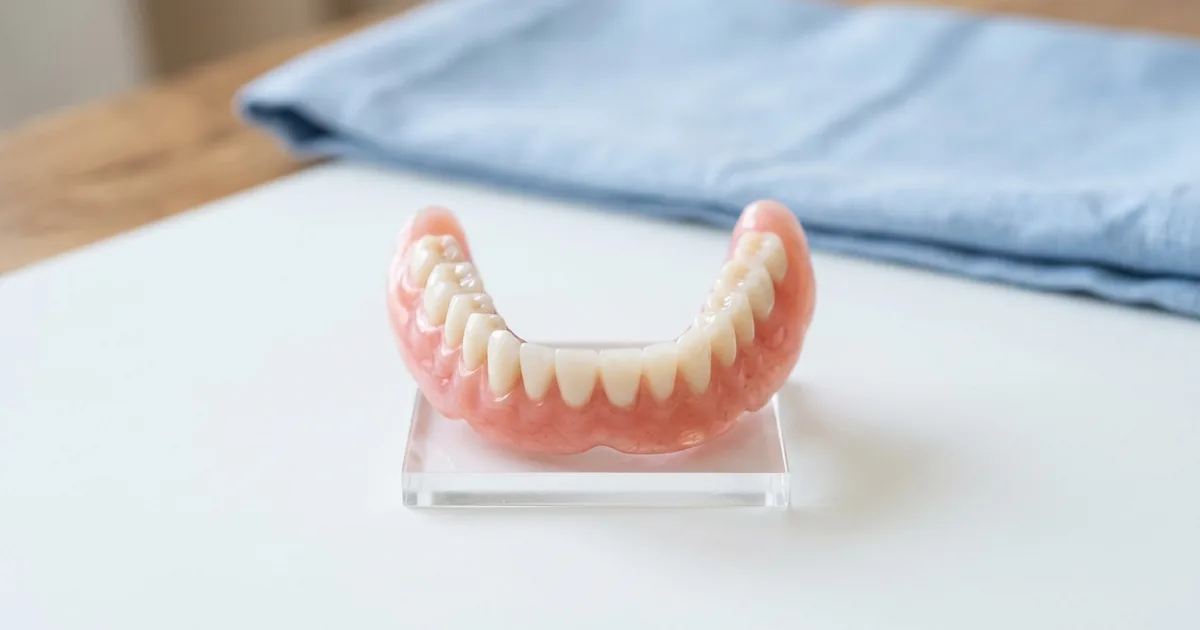
Dentists ask you to take dentures out overnight because the gum and bone underneath need a stretch of hours without pressure, and without a plate holding saliva and bacteria against them. Sleeping in dentures night after night is linked to sore, red tissue under the plate, faster shrinking of the gum ridge, and worse breath. The one exception is the first night with an immediate denture, when you follow the instructions you were given.
What happens to your gums under a denture all night?
The gum under a denture spends the night pressed, warm and damp, with less saliva moving over it than it gets by day. While you are awake, talking, chewing and swallowing shift the plate a little and let saliva wash underneath it. At night the plate sits still, saliva flow drops, and the warm acrylic becomes an easy place for yeast and bacteria to settle. Our post on how the bacteria in your mouth affect your health explains why that balance matters beyond the gums.
The gum ridge also keeps changing shape under any denture, from any office, and pressure around the clock is thought to speed that along. When the ridge shrinks, the plate no longer matches it, which is what denture relines are for. The overnight rule for full and partial dentures is the same one we give every patient. Take it out overnight and keep it in water or a soak.
Is sleeping in dentures really harmful?
It is harmful when it happens every night, and three common beliefs keep people doing it.
| The belief | What is true | What to do |
|---|---|---|
| A nap is fine | Short naps are usually not the issue. Nightly wear is | Take them out for the night's sleep |
| Adhesive makes it safe to sleep in | Adhesive holds the denture. It does not protect the gum | Use adhesive for daytime fit only |
| Taking them out is only about comfort | The rule is about the tissue, which needs hours off | Give the gum the night, every night |
The ADA's MouthHealthy guidance on dentures makes the same point. It advises taking dentures out at night so the gum tissue can rest and so the tongue and saliva can clean it the way they normally would. The advice is about the tissue under the plate, and it applies whether the denture feels comfortable or not.
What is the redness under my upper plate?
Red, sometimes slightly puffy tissue that matches the outline of the plate is usually irritation of the gum from a denture that has sat on it too long. It is often painless, so people tend to find it by chance in a mirror. Sore, cracked corners of the mouth sometimes come with it. Cleveland Clinic's health library entry on denture stomatitis describes it as inflammation under a denture, often involving yeast, and more common in people who wear dentures through the night.
It is also common in people with dry mouth, because a dry mouth has less saliva to keep the plate and the tissue clean. Our post on dry mouth in older adults explains why that gets more likely with age and with medications. The same night-wear habit is riskier at 75 than at 55 for that reason. A plate that smells by morning is a related sign, and our post on what causes chronic bad breath covers the denture side of it.
Redness under the plate needs a look, because a mirror shows you the redness but not what is causing it. The fix usually involves rest for the tissue, a cleaning routine for the denture, and sometimes a prescription that Dr. Estrada decides on at the visit. A single sore spot is a different problem, and our post on denture sore spots and adjustments covers when one needs a visit.
When is sleeping in dentures the right call?
The only time is the first night with an immediate denture, the kind placed the same day the teeth come out. That denture acts as a bandage over the healing sockets for the first night, and it comes out when you were told to take it out. Follow the instructions you were given, since they fit your mouth and your extractions. After that first stretch, an immediate denture follows the same overnight rule as every other.
New wearers sometimes keep a denture in because taking it out feels like starting over the next morning. The bulky, strange feeling of a new plate settles during the daytime hours, and our guide to getting used to new dentures week by week shows what to expect while it does.
What should I soak them in overnight?
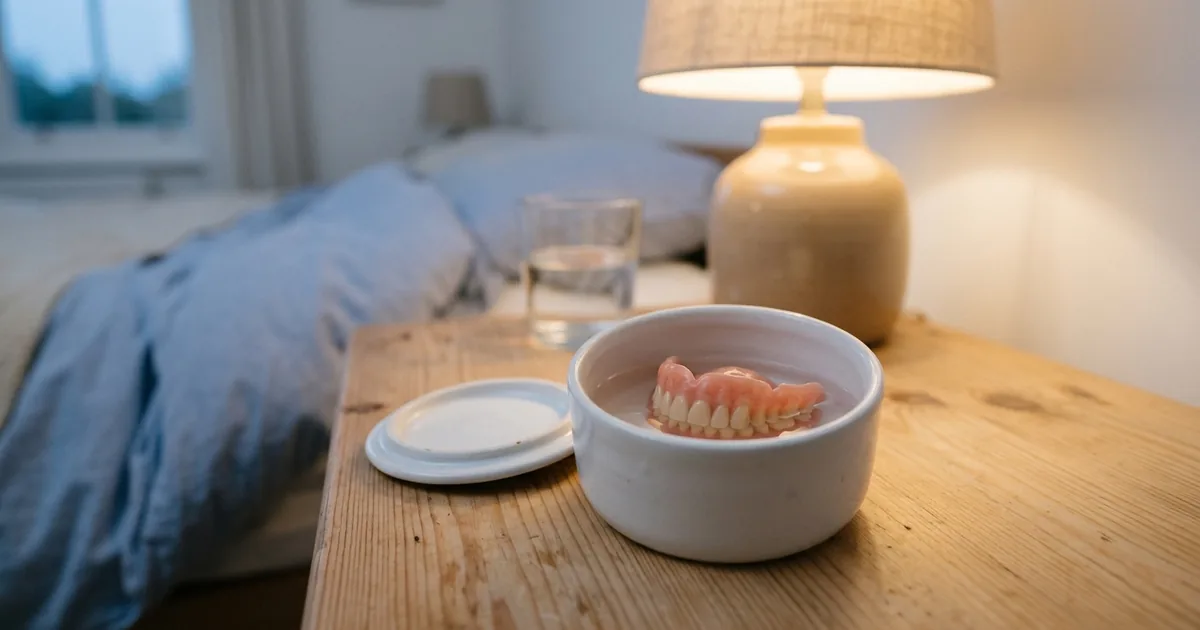
Water or a denture soak, so the acrylic does not dry out and warp. Never use hot water, which can change the shape of the base, and never leave a denture out on the counter to dry. A partial denture with metal clasps follows the same rule, in water or a soak made for partials. Rinse the denture well before it goes back in the morning, and brush your gums and tongue while it is out.
When should I come in?
A few things mean a visit instead of more waiting:
- redness under the plate that has not settled after a week or two of taking it out nightly
- a sore that has not healed in about two weeks
- pain under the plate, with the denture in or out
- a denture that feels loose in the morning
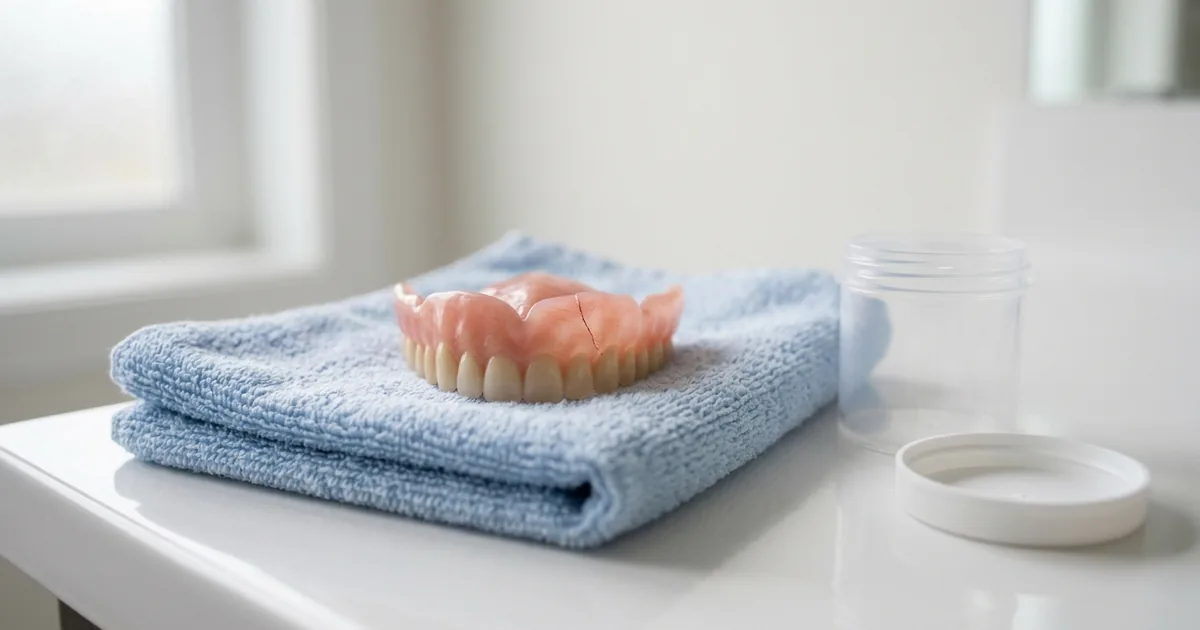
Needing more and more adhesive is a sign to come in, because the fit has changed. Sudden looseness with rapid weight loss or a new medication is worth mentioning to the physician too. We are open Monday through Friday, 9:00 AM to 5:30 PM. Outside those hours, leave a message, and urgent calls are returned first thing. A cracked plate is another reason to call, and our guide to a cracked or broken denture walks through the night before the visit.
A denture is a good outcome, and the overnight rule helps keep the gum under it healthy. Call (727) 869-3886 or use our contact page if the tissue under your plate looks red or sore. This article is general information, not a diagnosis. The exam shows what the redness is and what it needs.
Frequently Asked Questions
Is it bad to sleep in dentures just one night?
One night is unlikely to harm healthy gums, and the first night with an immediate denture is done on purpose. The trouble is the habit. A gum that never gets its hours off stays pressed and damp, and that is when red tissue and faster ridge change show up. If a night with them in happens, take them out the next morning, clean them, and let the gum rest for part of the day.
Should I take my partial denture out at night too?
Yes. A partial rests on gum in the gaps and clasps onto the natural teeth beside them, and both need the night off. The teeth that carry the clasps are the ones most prone to decay, so brushing and flossing them with the partial out matters more than anywhere else in the mouth. Store the partial in water or a soak made for partials, never hot water.
Why do my dentures feel tight in the morning after I leave them in?
Tissue that has been pressed all night swells slightly once the pressure comes off, so a plate that felt fine at bedtime feels snug when you take it out and put it back. The swelling usually settles after a few hours out. A denture that feels tight most mornings, or sore when it goes back in, is worth a fit check, because the gum underneath may be irritated and not only swollen.
Can I keep my dentures in a dry case instead of water?
No. Denture acrylic is made to stay moist, and a plate left dry overnight can warp enough to change how it fits. Keep it in water or a denture soak with the lid on, and change the water daily. When you travel, a small sealed cup of water works as well as the case at home. Rinse the denture well before it goes back in.