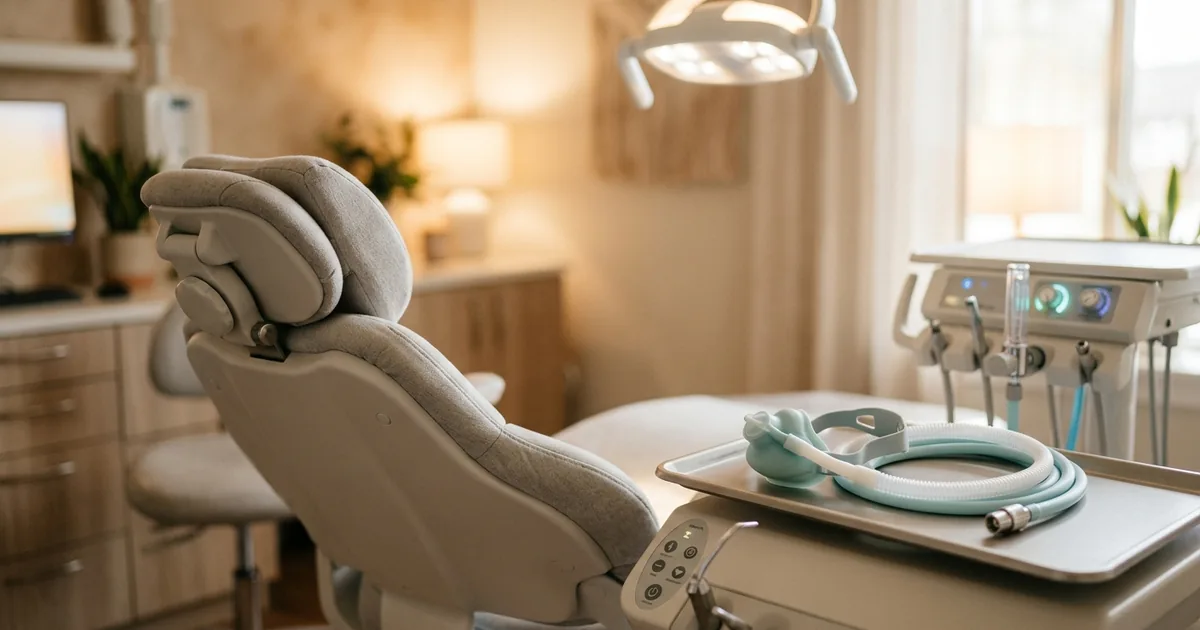

Oral sedation means taking a prescribed pill before your appointment that leaves you calm and deeply relaxed, but still awake and able to respond. You will feel drowsy and at ease, the visit will seem to pass quickly, and many people remember little of it afterward. Because the medication takes time to wear off, you will need someone to drive you to and from the office. It is a simple, well-tested way to get through dental care comfortably when nerves or a longer procedure are involved.
How oral sedation works
Oral sedation uses a pill, usually taken about an hour before your appointment so it has time to take effect. It belongs to a family of calming medications that ease anxiety and relax you. You stay conscious and can answer questions or shift if you need to, but you feel pleasantly detached from what is happening, and time seems to move fast. It is a step deeper than nitrous oxide and a step lighter than IV sedation, which makes it a comfortable middle ground for a lot of patients.
What the appointment feels like
Once the medication settles in, most people describe a warm, drowsy, unbothered calm. The sounds and sensations that usually make you tense simply do not register the same way. Many patients are surprised when we tell them the procedure is finished, because it felt much shorter than it was. A lot of people also remember very little of the visit, which for someone with real dental anxiety can be a relief in itself.
How to prepare
- Arrange a ride. The medication affects you for several hours, so a friend or family member needs to drive you both ways and stay with you.
- Follow the instructions we give you. We will tell you exactly when to take the pill and whether to eat beforehand.
- Wear comfortable clothes. Loose, cozy layers make the visit more pleasant.
- Share your full health history. Let us know about any medications or conditions so we choose the right approach. Our post on whether sedation is safe explains why this step matters.
What to expect afterward
The effects wear off gradually over the rest of the day, so plan to take it easy at home. You should not drive, work, or make important decisions until the next morning. Most people feel back to normal after a good night's sleep. We will give you clear aftercare instructions for whatever treatment you had, and you are always welcome to call with questions.
Is oral sedation right for you?
Oral sedation is a good fit if you have moderate dental anxiety, a strong gag reflex, trouble getting numb, or a longer procedure ahead where staying relaxed makes the visit easier. If your anxiety is milder, nitrous oxide may be all you need, and for very involved work, IV sedation might suit you better. We lay out the differences in our post on nitrous, oral, and IV sedation so you can see where you fit.
One pill, and the dread eases
For a lot of people, a small dose taken before the appointment is the difference between sitting in the chair and canceling again. Tell Dr. Estrada what scares you, honestly, and he'll match the lightest approach that still gets the work done. You'll find the basics on our oral sedation page, and the lighter option next to it on nitrous oxide. To talk it through, call (727) 869-3886 or reach us on the contact page. Dr. Estrada has been treating Hudson and Port Richey families for over thirty years, in English and Spanish, and he's seen every kind of nervous there is.
Frequently Asked Questions
Will I be asleep with oral sedation?
No. Oral sedation leaves you calm and deeply relaxed but still awake and able to respond. You feel drowsy and pleasantly detached, the visit seems to pass quickly, and many people remember little of it afterward.
Do I need someone to drive me?
Yes. The medication affects you for several hours, so a friend or family member needs to drive you both ways and stay with you. You should not drive, work, or make important decisions until the next morning.
How should I prepare for oral sedation?
Arrange a ride, follow the instructions we give you about when to take the pill and whether to eat, wear comfortable clothes, and share your full health history. Our post on whether sedation is safe explains why that last step matters.
Is oral sedation right for me?
It is a good fit if you have moderate dental anxiety, a strong gag reflex, trouble getting numb, or a longer procedure ahead. For milder nerves, nitrous oxide may be enough, and for very involved work, IV sedation might suit you better.