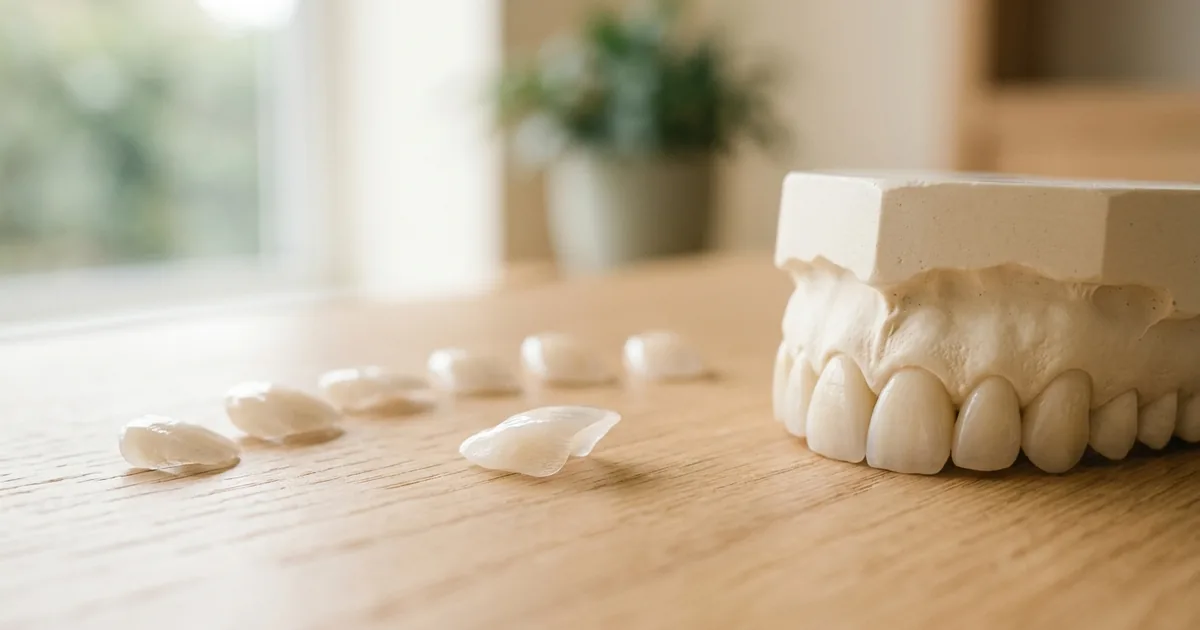
Dental veneers are thin, custom-made shells, usually porcelain, that are bonded to the front of your teeth to change their color, shape, size, or alignment. They can fix several things at once, covering stains, chips, small gaps, and worn or uneven teeth in one cohesive look. With good care, porcelain veneers commonly last ten to fifteen years or more before needing replacement. The process usually takes two visits and gives you a natural looking result.
What veneers can fix
Veneers are popular because a single treatment can address several cosmetic concerns at once. People choose them to:
- Brighten teeth that stay discolored even after whitening
- Repair chips and worn edges
- Close small gaps between teeth
- Make slightly crooked or uneven teeth look straight and uniform
- Reshape teeth that are too small or misshapen
Because they work on the front-facing surface, veneers are about appearance rather than function. If a tooth is badly damaged or weak, a crown may be the better choice, and we compare those options in our post on veneers, bonding, or crowns.
What the process involves
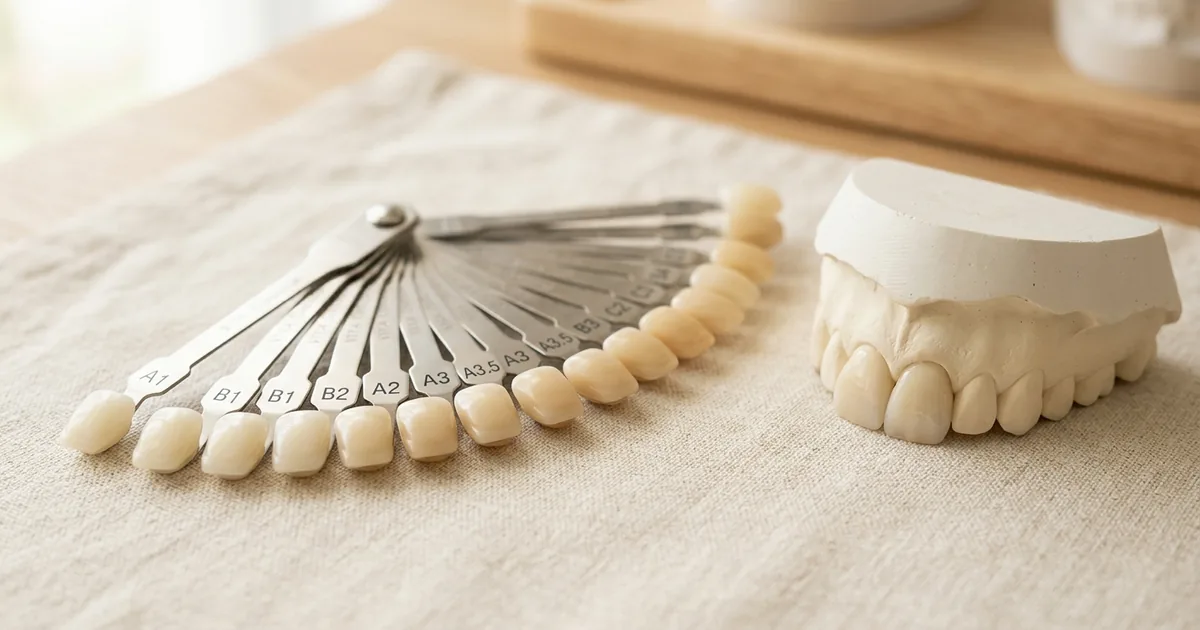
Getting veneers usually takes two appointments. At the first, Dr. Estrada talks through the look you want, then prepares the teeth by removing a very thin layer of enamel so the veneers sit flush and natural. He takes an impression and matches the shade to the smile you are going for. The custom veneers are crafted to fit you, and at the second visit they are bonded into place and fine-tuned. You leave that day with a finished smile.
How long do veneers last?
This is one of the most common questions, and the real answer depends on the material and how you care for them. Porcelain veneers commonly last ten to fifteen years, and often longer with good habits, before they need replacing. Composite veneers tend to last a shorter time. A few things make the biggest difference in how long yours hold up:
- Brushing and flossing daily, just like your natural teeth
- Not using your teeth as tools to open packaging or bite your nails
- Wearing a night guard if you grind your teeth
- Keeping up with regular checkups so small issues are caught early
It is worth knowing that veneers are not reversible, because a little enamel is removed to place them. That is not a drawback so much as a reason to choose an experienced dentist and plan the result carefully.
Caring for your veneers
Veneers do not ask much of you. You care for them the same way you care for your own teeth: brush twice a day, floss daily, and come in for regular cleanings. Porcelain resists staining well, though it is still smart to go easy on things like coffee, red wine, and tobacco that dull any smile. If you grind your teeth at night, a custom guard protects your investment.
Are veneers right for you?
Veneers suit people who have generally healthy teeth and gums and want to improve the look of their smile. If you have active decay or gum disease, those are treated first. And if your goal is a fuller transformation, veneers are often one part of a broader smile makeover that may also include whitening or bonding. An exam is the surest way to know what fits your situation.
See if veneers fit your front teeth
Veneers suit some smiles beautifully and are overkill for others, and the only way to know your case is to put your teeth in front of someone who works on them daily. Dr. Estrada will study the shape, shade, and spacing up close, then tell you straight whether veneers earn their place or a smaller fix gets you the same look. Browse what's involved on our veneers page, or compare it with dental bonding if you would rather keep more of the tooth. To book the conversation, call (727) 869-3886 or use the contact page.
Frequently Asked Questions
How long do veneers last?
It depends on the material and how you care for them. Porcelain veneers commonly last ten to fifteen years, and often longer with good habits, before they need replacing. Composite veneers tend to last a shorter time.
What can veneers fix?
A single treatment can address several concerns at once: stubborn stains that will not whiten, chips and worn edges, small gaps, and slightly crooked or uneven teeth. Because they work on the front surface, veneers are about appearance rather than function.
Are veneers reversible?
No. A thin layer of enamel is removed to place them, so veneers are a permanent commitment. That is not a drawback so much as a reason to choose an experienced dentist and plan the result carefully.
How do I make my veneers last?
Brush and floss daily just like natural teeth, avoid using your teeth as tools, wear a night guard if you grind, and keep up with regular checkups. Porcelain resists staining well, though going easy on coffee, red wine, and tobacco helps keep any smile bright.