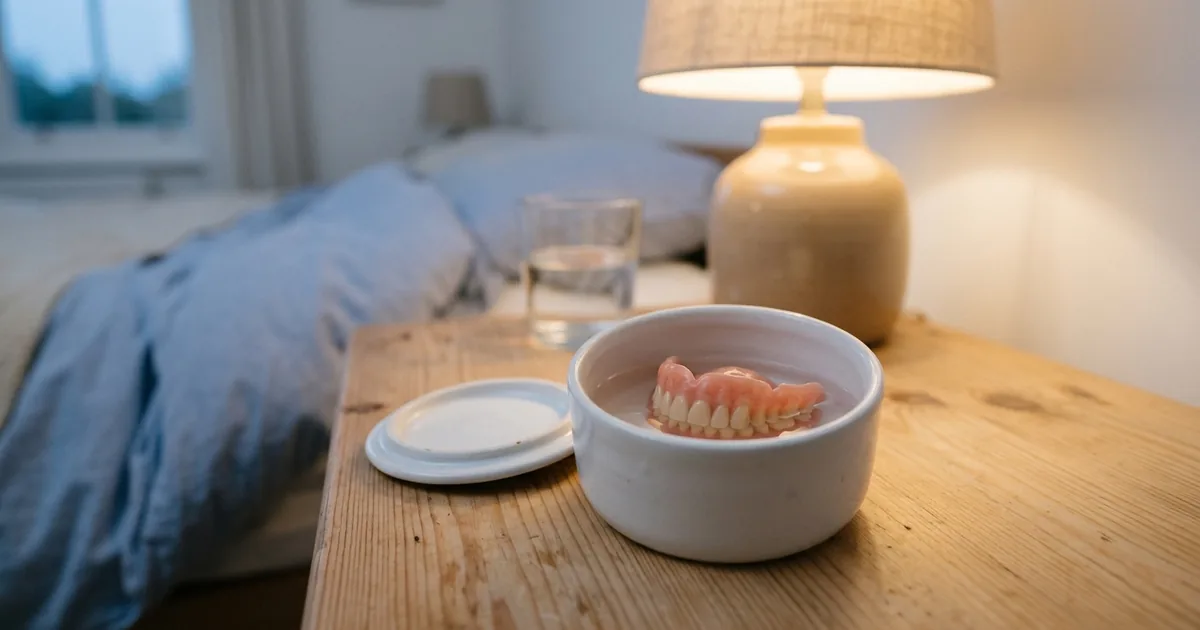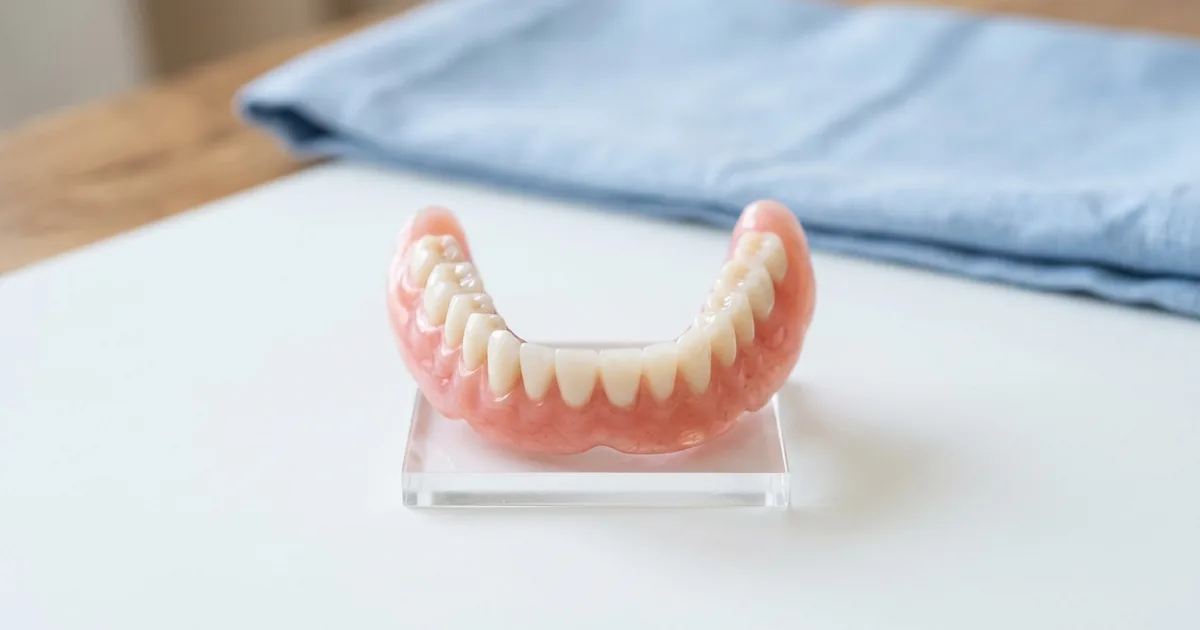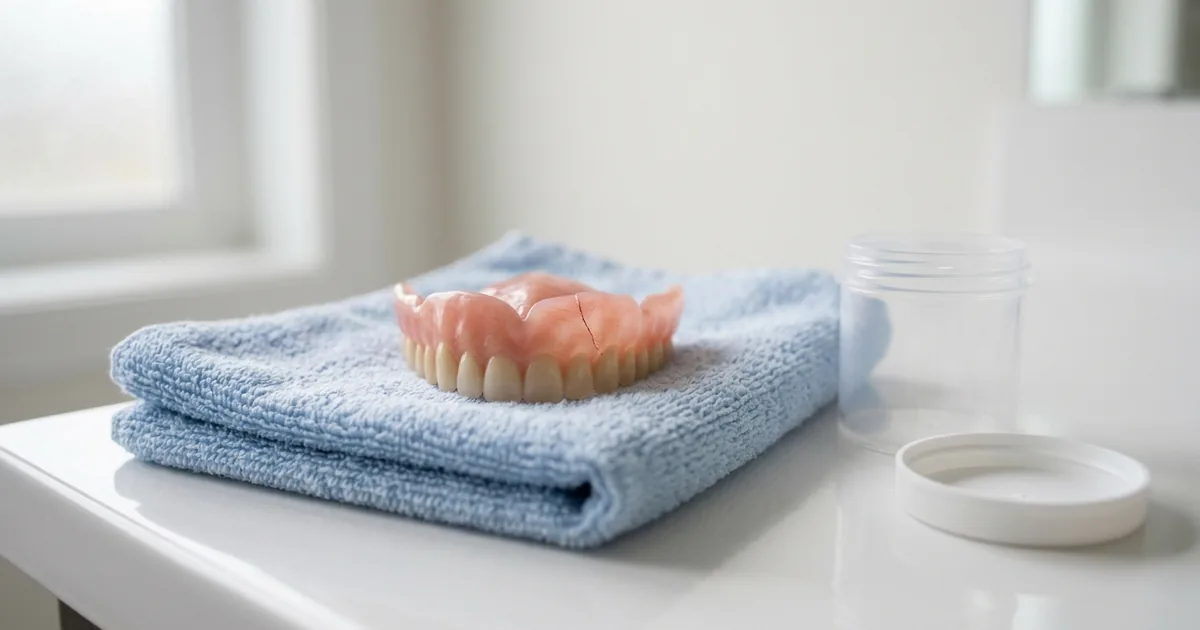
A denture sore spot is a small area where the denture base presses harder than the gum underneath can tolerate, and with a new denture a few of them are expected in the first weeks. An adjustment visit usually removes that one pressure point in a few minutes. A sore that has not healed in about two weeks, whether or not the denture caused it, needs to be looked at.
Why does my denture rub in one spot?
Four things cause most sore spots. A new denture base usually has a few high points, spots where the base sits a little proud, that only show up once the gum has carried it for a day or two. An older denture starts to rub when the gum ridge it sits on has changed shape, which gums do over the years with any denture from any office. The plate stays the same while the gum beneath it does not.
Food trapped under the plate presses in one place until it is rinsed out. A partial denture clasp can also rub the gum beside the tooth it holds. None of these means the denture was made badly. That is normal for a plate resting on living tissue, and it is what denture adjustments, repairs and relines are for.
Is this a new-denture sore or something else?
The three kinds of sore look alike for a day and then behave differently. The table shows how to tell them apart.
| What it is | Looks and feels | Usual fix | Call or wait? |
|---|---|---|---|
| New-denture pressure spot | Small red or raw patch under the base. Eases within a day out. | A quick adjustment to that one high point | Call. Do not push through it |
| Older denture that started rubbing | Sore in several places. Or a plate that lifts. | Usually a reline, so the base matches the gum again | Call. One adjustment will not hold |
| A sore that has not healed in about two weeks | Stays sore, denture in or out. Or a lump, white or red area, or bleeding spot. | An exam of the tissue itself first | Call. The gum needs checking first |
What can I do at home tonight?
Give the tissue a rest for a few hours if the spot is raw, rinse with warm salt water, and keep to soft foods until the visit. Then wear the denture for a few hours before you come in, even though that feels backward, so the spot is still visible when we look. A sore spot that has had two days off looks healed and hides the cause. Overnight is the longest rest the tissue gets, and why gums need a break from dentures at night is answered in its own post.
Adhesive is fine as a short-term comfort, used sparingly. Needing more and more adhesive is a sign to come in, because the fit has changed. If your mouth has become drier with age or medications, friction goes up and sores come more easily, and our guide to dry mouth in older adults explains what helps.
Do not file, sand or trim the denture at home. A spot that takes us minutes to adjust can become a crack, a lost clasp or a plate that no longer seals, and the repair page says the same about household glue. Home reline kits are not a substitute either. If the plate has already cracked or a tooth has come off, read what to do if your denture breaks before you do anything else.
What happens at a denture adjustment visit?
The visit is short and usually needs no numbing. A thin layer of pressure-indicating paste goes on the side of the denture that sits on your gum. You bite and swallow a few times, and the paste rubs away where the base is pressing too hard. Dr. Estrada marks that spot, trims and polishes a small amount of the base, and puts the denture back in to check.
Soreness after an adjustment responds to soft foods and over-the-counter pain relief, and it fades fast as your mouth gets used to the new position. New full dentures often need a visit or two like this in the first month, and both offices, Hudson and Port Richey, see patients for them.
When is a sore spot a reason for a reline instead?
Soreness in several places, a denture that lifts or rocks, or food under the base at every meal means the whole fit has changed, not one high point. Trimming one spot would just move the pressure to the next. Sudden looseness with rapid weight loss or a new medication is worth mentioning to the physician too.
A reline adds new material to the side of the denture that sits on your gum so it matches the ridge again. Most denture wearers need one every couple of years as the ridge keeps changing, and the reline page linked above covers what is involved. If the loose plate is a lower, our post on why a lower denture will not stay in place explains the reason.
When should a sore be looked at regardless of the denture?
A sore that has not healed in about two weeks gets looked at, whether or not the denture caused it. The National Institute of Dental and Craniofacial Research gives the same two-week line for any mouth sore or patch that does not clear. A sore with a lump under it, a white or red patch, or a spot that bleeds easily should be seen sooner.
Denture wearers often skip the yearly visit because there are no teeth to check, which means the gums and the rest of the mouth go unexamined for years. The annual tissue check takes a few minutes and is the reason to keep the appointment even with a full denture.
If the denture is new and the sore spots come with a lisp, extra saliva and a bulky feeling, those are the ordinary first weeks. Our guide to getting used to new dentures week by week shows what settles and when.
Do not push through a sore spot
A denture is a good outcome, and a sore spot is a small, fixable part of wearing one. Wear it for a few hours, then call (727) 869-3886 or use our contact page for an adjustment visit, and mention any sore that has lasted past two weeks. This article is general information, not a diagnosis, and we decide what the spot needs once we have seen it.
Frequently Asked Questions
Should I leave my denture out until the sore heals?
Rest it for a few hours if the spot is raw, but do not leave the denture out for days before an adjustment visit. The sore spot shows us where the high point on the base is, and a spot that has healed over cannot be found. Wear it for a few hours before you come in, then leave it out overnight as usual.
Can a sore spot mean my denture needs replacing?
One spot almost never does. Sore spots in several places, a base that has thinned, teeth worn flat, or a plate that has been relined several times are the signs that the denture has reached the end of its working life. The exam shows which it is, and a reline is tried before a remake when the base is still sound.
Why do I get sore spots after eating certain foods?
Hard or sharp foods such as crusty bread, nuts and seeds press the denture into the gum unevenly, and small pieces work under the base and sit on one spot until they are rinsed out. Chewing on both sides at once spreads the load, and rinsing after meals clears the trapped pieces. A spot that returns after every meal in the same place is a high point and needs an adjustment.
Is it normal to get sore spots years after getting dentures?
Yes, and it usually means the ridge under the denture has changed while the base has not, which happens with any denture from any office over the years. A sore spot that appears after a long quiet stretch is the common first sign that a reline is due. Dry mouth from a new medication can bring on the same thing and is worth mentioning at the visit.