Dr. Estrada's first goal is always to save a tooth, and the decision to move to dentures is made tooth by tooth and then mouth by mouth, resting on bone and gum support, decay depth, how many teeth can be restored, and what your health and daily life can support. Dentures are a good outcome when the remaining teeth cannot be made sound, and keeping a few strong teeth for a partial is often the middle path. The consultation maps that out before anything is scheduled.
How does a dentist decide whether a tooth can be saved?
A tooth that can be saved usually should be, and the decision starts with what the X-ray and the exam show about one tooth at a time. Bone support comes first. A root held by a good depth of bone can carry a crown for years. A root that has lost most of its bone to gum disease will loosen whatever is built on top of it.
Decay depth and breakage come next. Decay that stays above the gum and leaves sound tooth around it can be filled or crowned. Decay that runs well below the gum, or a crack that travels down the root, leaves nothing solid for a crown to grip. A root canal and crown can save a tooth with a healthy root and enough structure left, which is why Dr. Estrada looks at every restorable tooth before dentures come into the conversation.
Mobility and infection complete the tooth-level assessment. A tooth that moves under finger pressure, or one with an abscess that keeps returning, has usually lost its footing at the root. For a single tooth, see our post on signs a single tooth may need to come out.
When does the answer change from tooth by tooth to the whole mouth?
The answer changes when the teeth that can be saved are too few or too scattered to make a working bite. A mouth with six sound teeth spread across both jaws cannot chew on them, and crowning each one leaves the gaps unfilled. At that point the plan is drawn for the mouth as a whole instead of for each tooth.
Repeated repairs count too, measured in visits and time. A tooth that has had a filling, then a larger filling, then a crown, then a root canal through the crown is nearing the end of what dentistry can add to it. The consultation looks at how many teeth are on that path.
Gum disease that is not under control tips the balance as well, because bone that is still being lost will undermine any crown or bridge placed on it. Our post on how gum disease affects the rest of your health explains why the gums are treated before anything is built on them.
Health and daily care are the last factors. Healing after many extractions and the upkeep of crowns and bridges both ask something of the body and the hands. A denture that comes out to clean is sometimes the sounder plan for someone whose dexterity, medical conditions or living situation make flossing around crowns unrealistic.
Can I keep some teeth and still get a denture?
Yes, and keeping a few strong teeth to anchor a partial is often the middle path. A partial denture holds replacement teeth on a base that matches your gums and clasps gently onto the teeth you keep, so it fills the gaps without replacing everything. Our partial dentures page describes the cast metal and flexible styles.
Not every tooth makes a good anchor. Canines have the longest roots in the mouth and sit where a partial needs its grip, so a sound canine is worth real effort to keep. A solid back molar gives a partial something to rest on when you chew. A front tooth with a short root and a much-patched crown adds little.
Those teeth need careful cleaning in return. Food and plaque collect around the clasp where the brush misses, so the clasp teeth need thorough brushing, flossing and a check at every visit. The ADA's MouthHealthy guidance on dentures notes that a partial also keeps the remaining teeth from shifting into the gaps, one more reason to keep a well-chosen anchor tooth.
Which of these four situations sounds like yours?
Most people deciding about dentures fit one of four pictures, and the table shows what usually makes sense in each.
| Your situation | Usual path | Consultation checks |
|---|---|---|
| A few failing teeth, the rest sound | Save and restore, replace the few that go | Bone around the failing teeth, bite on the rest |
| Many worn or broken teeth, good bone | Restore what holds, or a full plan on implants | How many teeth can take a crown, bone depth |
| Advanced gum disease, loose teeth | Treat the gums first, then a partial or full denture | Pocket depths, mobility, which anchors can be kept |
| Restorable teeth, repairs wearing you down | A tooth-by-tooth plan with a stopping point | Which repairs will hold, which teeth keep repeating |
What are the signs it is time to talk about dentures?
Any of these is a reason to book a consultation and talk through where your teeth stand:
- infections that keep returning in the same teeth, with swelling or a bad taste
- repeated repairs on the same teeth, each lasting less time than the last
- teeth that feel loose, or that have started to shift and open gaps
- difficulty eating, with meals chosen around what you can chew
- pain that returns after each treatment settles it for a while
None of these means the decision is made. Each one means it is time to go through the teeth one by one, which is what the consultation does. The CDC reports that roughly one in six adults aged 65 and older has lost all of their natural teeth, so this is a common decision. If feeling embarrassed about your teeth has delayed the visit, we wrote about what Dr. Estrada actually thinks when he sees them.
What happens at the consultation?
The consultation is a full exam with X-rays, gum measurements and a tooth-by-tooth plan. Dr. Estrada looks at how your teeth and jaw fit together and measures the gum pockets around each tooth. Then he goes through every tooth with you, so you know which ones can be made sound and which cannot.
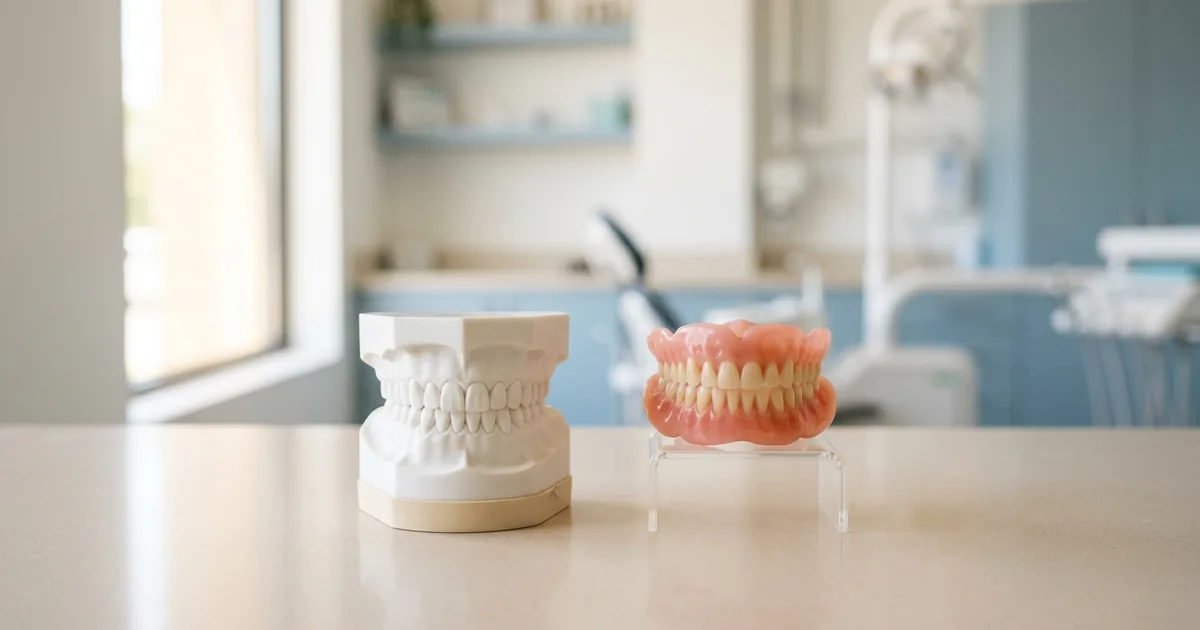
Save and restore keeps the teeth that can hold a filling, crown or root canal. A partial anchors on the strongest teeth and fills the rest. An immediate denture is made ahead of time and placed the day the remaining teeth come out. Same Day Teeth are a full arch of fixed teeth on a small number of implants, placed in one planned visit. Every route is done here, by the same dentist who does the exam.
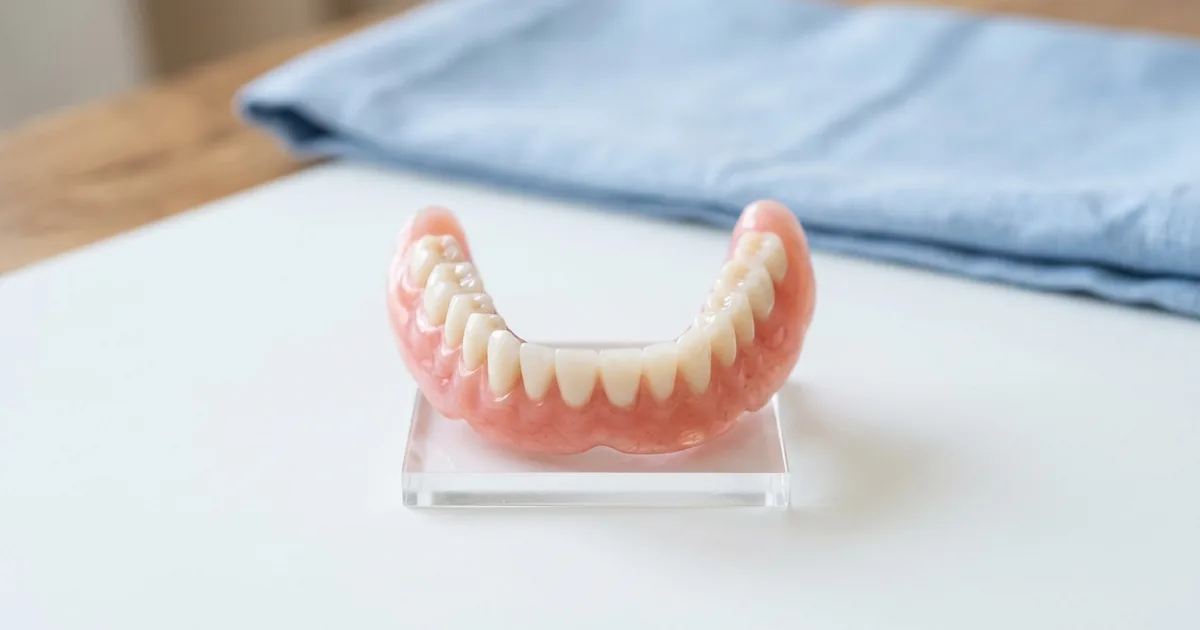
Implant retention adds more stability to a lower denture that would otherwise move. For the full side by side, our post on dentures, bridges, implants or All-on-4 compared covers how long each lasts and what each does to the jawbone.
Cost is shaped by how many teeth are involved, whether the plan is a partial or a full denture, and whether implants are part of it. The consultation maps the plan and the cost before anything is scheduled. We accept PPO insurance and Medicare, and we offer CareCredit financing so treatment can be paid over time.
If dentures are the answer, what happens next?
Two paths follow. With an immediate denture, the denture is designed while your teeth are still in place and goes in the day they come out. The healing and the relines are described in our post on what the first month with an immediate denture is like. With a conventional denture, the gums heal first and the denture is made to the healed shape, which means a stretch without teeth in between. Our guide to timing dentures after your teeth are pulled compares the two schedules and how to avoid a gap.
If several teeth are coming out at once, bring your medication list to the consultation, because blood thinners and bone medications change how the extractions are planned. Sedation is available for the extraction visit, from nitrous oxide to oral and IV sedation.
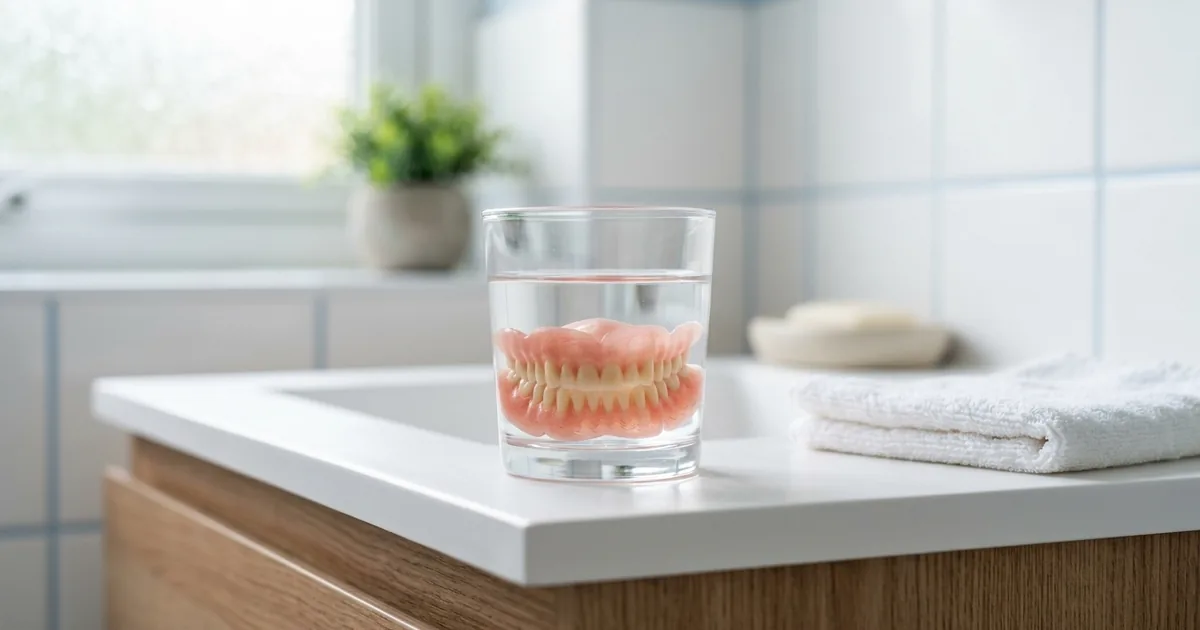
A denture is a good outcome, and living with one has its own routine. Take it out overnight and keep it in water or a soak, and expect relines every couple of years as the gum ridge changes. Needing more and more adhesive is a sign to come in, and sudden looseness with rapid weight loss or a new medication is worth mentioning to the physician too. A sore that has not healed in about two weeks gets looked at.
Bring the question to the consultation
The decision between saving your teeth and getting dentures is made with the X-rays on the screen, one tooth at a time, and either answer is a good one when it fits the mouth. Call (727) 869-3886 or use our contact page to book the consultation at the Hudson or Port Richey office. This article is general information, not a diagnosis. Which teeth can be saved is decided at the exam, with the X-rays and gum measurements in front of you.
Frequently Asked Questions
Is it better to get dentures sooner or keep repairing my teeth?
Neither is better on its own. Repairing is the right call while the repairs hold and the teeth underneath are sound, and the right call changes when each repair lasts less time than the last, infections return, or the teeth that remain cannot make a working bite. The consultation sets that stopping point with you in advance, so the decision is planned instead of forced by the next broken tooth.
Can gum disease be treated first so more teeth can be kept?
Often, yes. Scaling and root planing, the deep cleaning that removes tartar from the roots, can stop the bone loss in many mouths, and teeth that were borderline become keepable once the gums are stable. Bone that has already been lost does not grow back, so a tooth with very little support stays a poor anchor, but treating the gums first is the normal order before any partial or denture is planned.
Does my age change whether my teeth are saved or removed?
Age itself does not. Bone support, decay depth, gum health and general health decide it, and those vary more between people than between decades. What age changes is the context around the decision, such as healing time, medications, dexterity for home care, and how many more years of repairs a tooth would have to survive. Those are weighed at the consultation alongside the X-rays.
Will keeping a few teeth make a partial denture harder to wear?
Usually the opposite. The teeth a partial clasps onto give it a grip and stop it sinking into the gum when you chew, which is why a partial anchored on sound canines and molars tends to feel more secure than a full lower denture resting on gum alone. The trade is upkeep. The clasp teeth need careful cleaning, and the partial comes out at night to rest the gums.