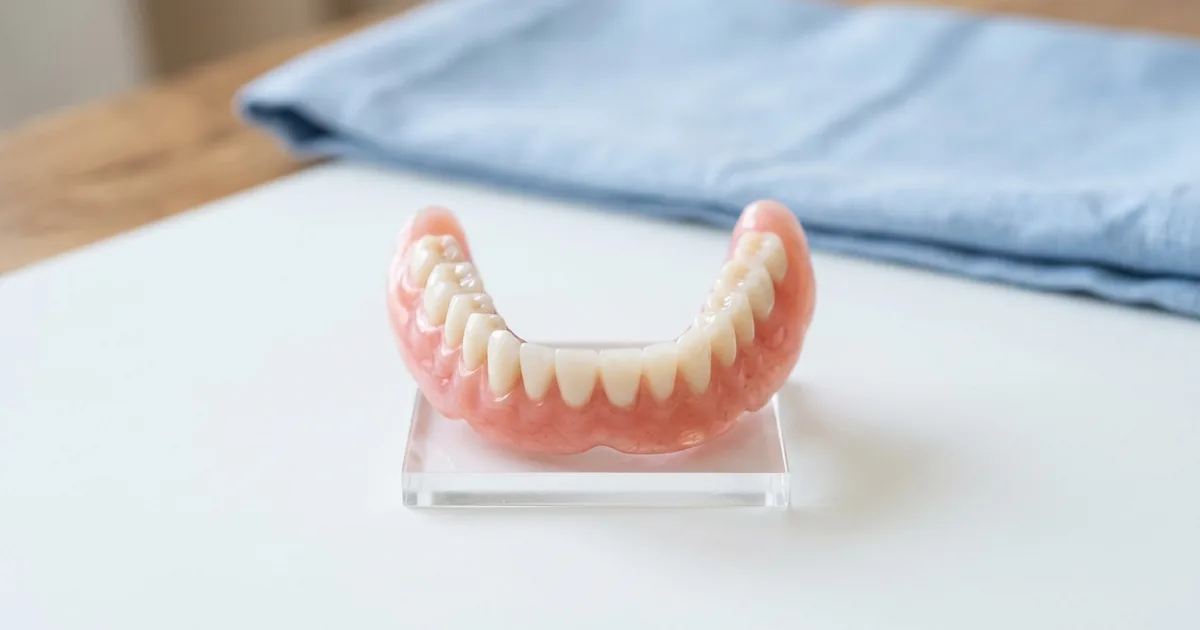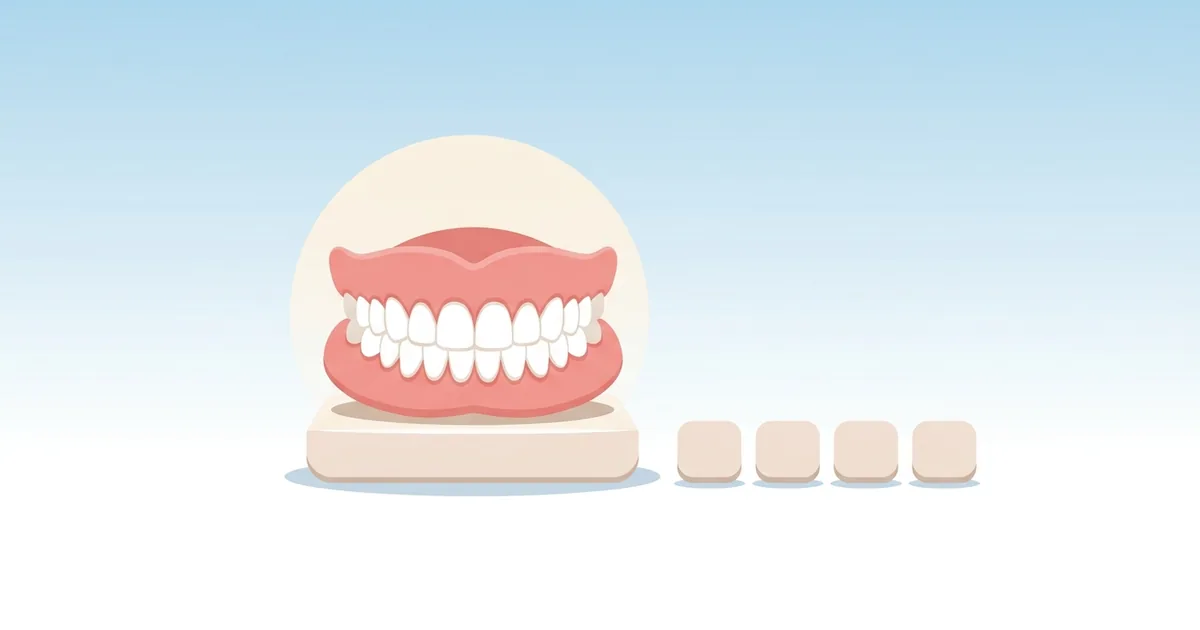
An immediate denture is made before your extractions and placed the same day the teeth come out, so you leave the office with teeth. The first day is about swelling and keeping the denture in, the first week is about healing under it and the first adjustments, and the first month is when the gums shrink fastest and a soft reline keeps the fit. It is removable, and it is a different thing from Same Day Teeth, which are fixed on implants.
What is an immediate denture and how is it different from Same Day Teeth?
An immediate denture is a removable full denture made ahead of time and placed the same day the teeth come out, so you are never without a smile. The trade-off is that it needs relining later as the gums settle and shrink during healing. Our full and immediate dentures page describes both paths, and Dr. Estrada explains which one fits your situation before any extraction is booked. The two timelines run side by side in our post on when dentures go in after your teeth are pulled.
Same Day Teeth are a different treatment. A small number of implants support a complete arch of fixed teeth placed the same day, and those teeth do not come out. Implant supported dentures sit between the two, snapping onto a few implants for more stability while still coming out to clean, and they are not usually a single-day process. For how fixed teeth and removable dentures compare, read our post on same day teeth on implants versus traditional dentures.
What does the first day with an immediate denture feel like?
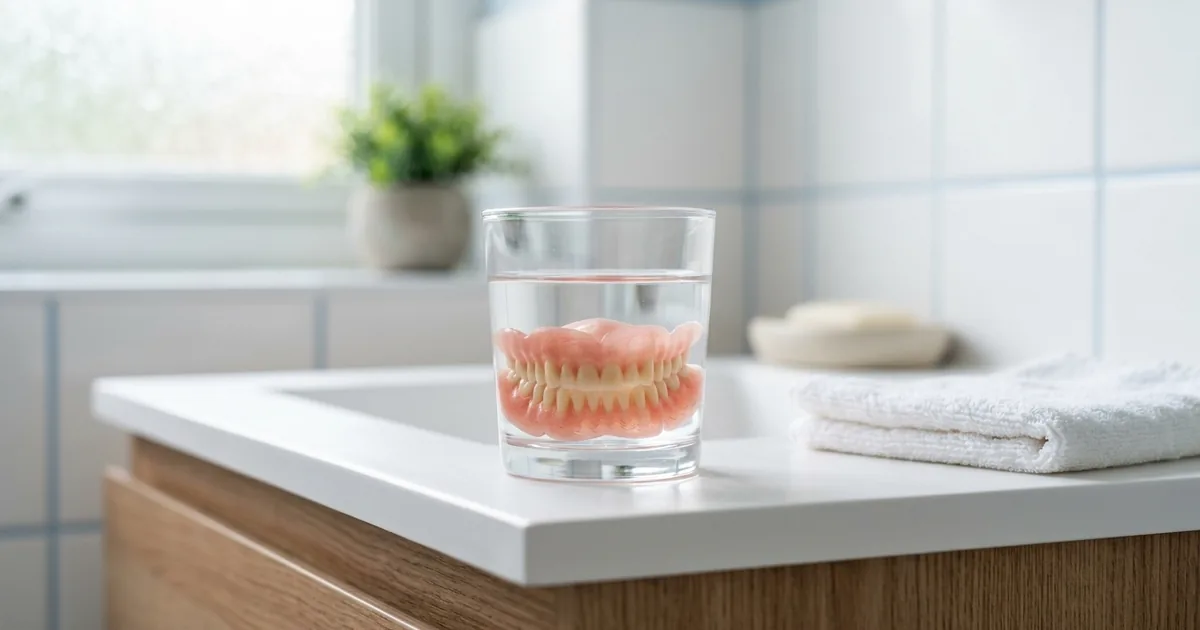
You leave with the denture in place, and it stays in the first night. Follow the instructions you were given, because on day one the denture works like a bandage over the sockets, holding gentle pressure on them while the clots form. The lifelong rule to take it out overnight and keep it in water or a soak starts after the first check, once we have seen the gums. The reason behind that rule, and the first-night exception, is in our guide to whether you should sleep in your dentures.
Swelling builds through the first evening, and the denture feels bulky, tight and strange. A little oozing under the plate is normal on day one, and the pink tinge in your saliva looks like more blood than it is. Bleeding that soaks through gauze or does not slow with firm pressure is a call to the office.
Eat soft, cool foods with the denture in, and keep the first days quiet for the sockets: no spitting forcefully, no straws, and no smoking. Leave warm salt water rinses until the second day. For the ache, an over-the-counter pain reliever you already know is safe for you, taken as the label directs, takes the edge off. Check with your doctor or pharmacist first if you take a blood thinner, have kidney, liver or stomach problems, or are pregnant.
What happens in the first week?
The first check visit usually comes within the first few days, and that is when the denture comes out for the first time. We look at the sockets, clean the denture, and show you the removal and cleaning routine that starts now. From here the denture comes out overnight and goes back in each morning, and healing after extractions follows the same day by day pattern as any extraction.
Sore spots show up in the first week as the swelling changes and the base shows its high points, the places where it presses a little harder on the gum. The first adjustments are quick visits that remove one pressure point at a time, and our post on denture sore spots and adjustments explains what to do before you come in. Do not push through a sore spot, and do not file or trim the denture at home.
Swelling usually peaks around the second or third day and then eases. Under the denture the gums look red and uneven at first, with the sockets visible as small dips, and by the end of the week the edges are pinker. A sore that has not healed in about two weeks gets looked at.
What changes in the first month?
The gums and the ridge underneath settle fastest in the first month, so a denture that felt tight in week one can feel looser by week three. The denture itself has not changed, but the gum ridge it sits on has shrunk a little, and a thin gap has opened between the base and the gum. This is the normal course of healing, and the reason an immediate denture is planned with relines from the start.
The soft reline is part of the normal process. A cushioned material goes on the side of the denture that sits on your gum, filling the gap so the plate seals again and stays gentle on tissue that is still tender. Our denture repair and reline page notes that relines come sooner in the first year after extractions, when the gums settle fastest.
Adhesive is fine as a short-term comfort between relines, used sparingly, but needing more and more adhesive is a sign to come in. Sudden looseness with rapid weight loss or a new medication is worth mentioning to the physician too. Speech and eating settle over the same weeks, and our guide to getting used to talking and eating with new dentures covers that side of it.
When does the final reline or the final denture happen?
The ridge keeps changing for months after extractions, and most of that change is usually done in the second half of the first year, though the timing varies from person to person. The ADA's MouthHealthy guidance on dentures notes that bones and gums shrink during healing, especially in the first six months after teeth are removed. For that reason an immediate denture needs more adjustments than a conventional one to fit properly.
Once the ridge has settled, the immediate denture either gets a hard reline, which replaces the lining with durable acrylic, or gives way to a conventional denture made to the healed shape. Which one makes sense depends on how the immediate denture has held up and how much the ridge has changed. After that, relines every couple of years are the ordinary maintenance of any denture.
Immediate denture timeline at a glance
Timing varies from person to person, and your own visits are set at each check.
| Stage | What is normal | At the office | Call if |
|---|---|---|---|
| Day 1 | Swelling, a bulky feeling, pink saliva. Denture stays in overnight | Places the denture and books the first check | Bleeding soaks gauze or pain is not controlled |
| Days 2 to 7 | Swelling peaks then eases. First sore spots. Denture out overnight | First check, cleaning routine, first adjustments | Pain worsening around day three, fever, growing swelling |
| Weeks 2 to 4 | Gums settling, denture feels looser, speech improving | Adjustments as needed. Soft reline when the gap opens | A sore that lasts past two weeks |
| Months 2 to 6 | Ridge still shrinking. Looser fit between relines | Soft relines repeated as the ridge changes | Rocking, food under the base, more and more adhesive |
| Months 6 to 12 | Ridge mostly settled. Fit holds longer | Hard reline or a conventional denture | Looseness returns, or sudden looseness with weight loss |
Who is a good fit for an immediate denture?
An immediate denture suits a patient who does not want a stretch without teeth and accepts the relines that come with healing under a denture. A conventional denture made after healing gives the best long-term fit for someone who can manage a few weeks without teeth in between. Same Day Teeth suit a patient with enough bone who wants fixed teeth on implants. All three are done in-house, and the consultation settles which one fits you.
The first month is a series of short visits, and keeping each one keeps the fit comfortable while the gums heal. If something changes between visits, call (727) 869-3886 or use our contact page. We are open Monday through Friday, 9:00 AM to 5:30 PM. Outside those hours, leave a message, and urgent calls are returned first thing. This article is general information, not a diagnosis. When each reline falls is decided at your checks.
Frequently Asked Questions
Will my immediate denture look like the teeth I had before?
It can be made to, because the denture is designed while your teeth are still in place, so the shade, shape and arrangement can be matched to them. Many people use the chance to change something they never liked, such as a worn edge or a gap. Say so at the design visits, because once the denture is made the look is set until the final denture is planned.
Why does my immediate denture feel loose after a few weeks?
The gums and bone under it are shrinking as the sockets heal, and the denture is not. A gap opens between the base and the ridge, and the plate starts to move when you chew or talk. This is expected in the first month, and it is what the soft reline is for. If you are reaching for adhesive more often to hold it, call for the reline instead of waiting for the next scheduled visit.
Can an immediate denture become my permanent denture?
Often, yes. Once the ridge has settled, a hard reline refits the denture to the healed shape, and if the base and teeth are still sound it can serve for years with ordinary maintenance. If the immediate denture has worn, or the ridge has changed so much that a reline cannot restore the fit, a conventional denture made to the healed ridge is the better answer. Dr. Estrada decides which at the final check.
How many visits does an immediate denture take in the first year?
More than a conventional denture, and the visits are short. Expect the design visits before the extractions, the extraction day itself, a first check within days, a few adjustments for sore spots, one or more soft relines in the first months, and the hard reline or replacement once the ridge has settled. Both offices, Hudson and Port Richey, see patients for these visits.