Teeth keep moving for life, so lower front crowding shows up even in people who never had braces. A slow forward drift, changes in the bone and gum that hold the teeth, worn edges and the daily pressure of the tongue and lips all add up over the decades. Most of it is ordinary, but a new gap, or front teeth that have started to flare outward, can be the first sign of gum disease and deserves a look.
Why do teeth shift at all as you get older?
Teeth shift because they sit in living bone, held by a ligament that responds to pressure for as long as you live. Every tooth has a slight lifelong tendency to drift toward the front of the mouth, which dentists call mesial drift, and the back teeth push on the ones ahead each time you bite. Over thirty or forty years that small push adds up.
The support changes too. The bone and gum around the roots remodel with age, and bone lost to gum disease gives the teeth less to hold onto. Decades of wear on the biting edges change how the upper and lower teeth meet, and the lips press inward while the tongue presses outward, so the arch slowly reshapes itself. The same response to pressure is why orthodontic treatment for adults works, since teeth can be moved back as well as forward.
Why are my bottom front teeth getting crooked?
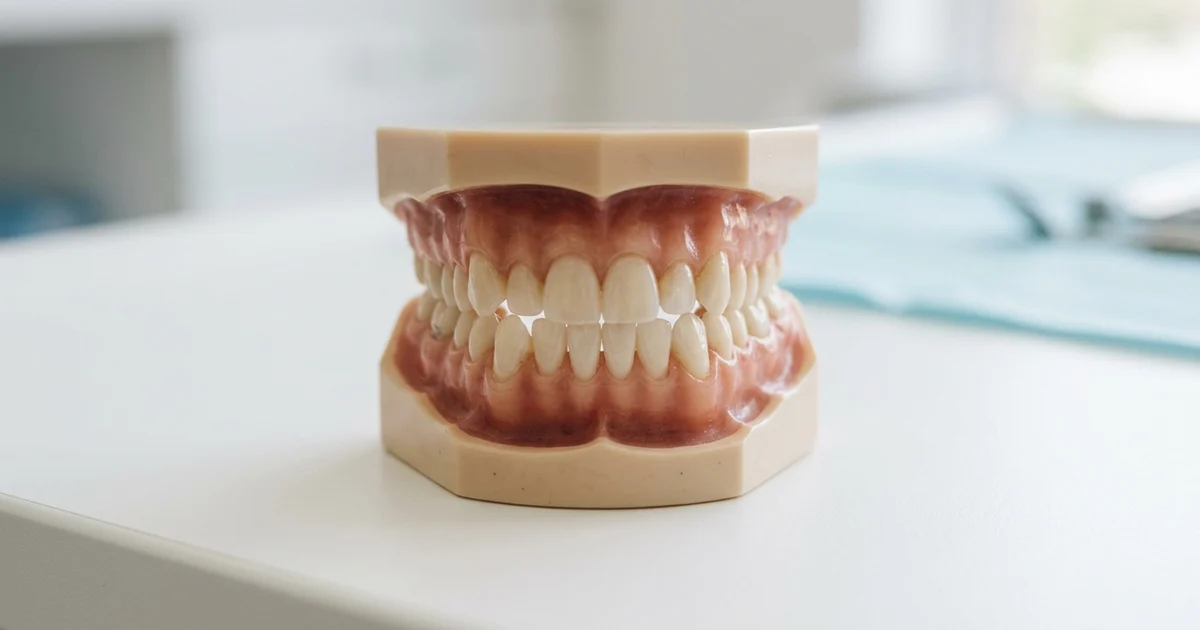
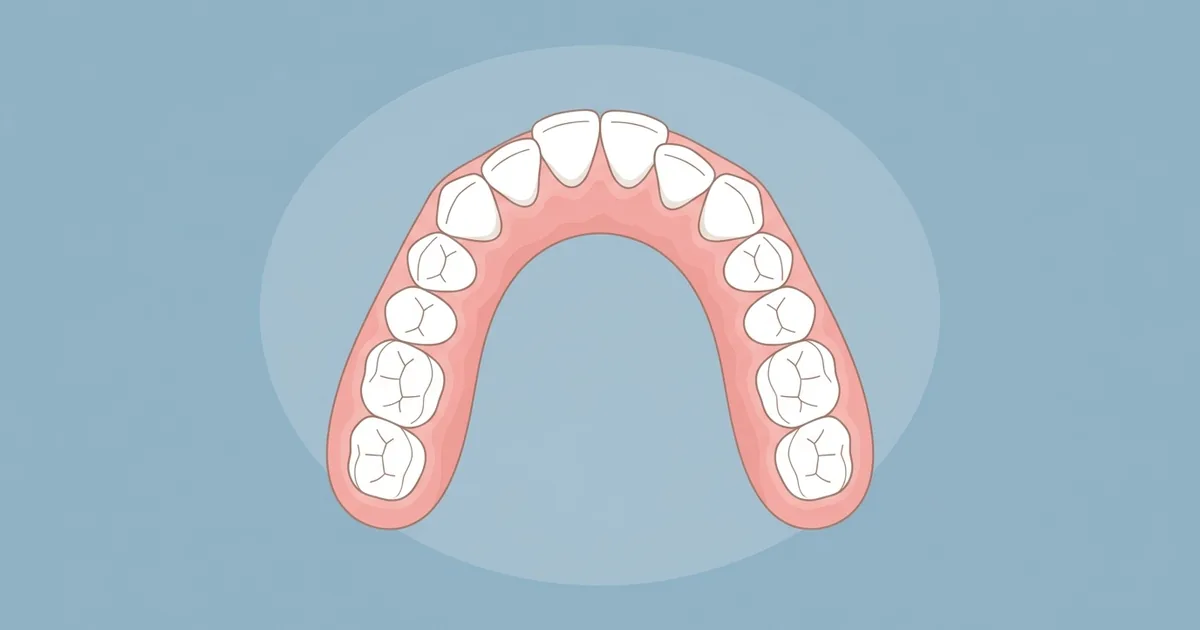
Lower front crowding is the most common change people notice after 50, and it comes from the shape of the lower arch. The lower front teeth are the narrowest in the mouth, held in the tightest curve, so forward drift from the back teeth has nowhere to go except overlap. One tooth tips, the next slides behind it, and over years the row looks like it was never straight.
Worn edges speed it along. As the biting edges flatten, the upper front teeth sit differently against the lower ones and nudge them with every bite. The crowding is usually harmless on its own, but overlapped teeth trap plaque and are harder to floss, which is the health reason to keep an eye on it.
Why is a gap opening between my teeth, or my front teeth flaring?
A new gap or front teeth that fan outward is the one change that should be checked. When gum disease destroys the bone around the front roots, the teeth lose their footing, and ordinary lip, tongue and bite pressure tips them forward and apart. Dentists call it pathologic migration, and it often appears before any tooth feels loose.
The CDC reports that about seven in ten adults aged 65 and older have some form of periodontal disease, so new spacing in that age group is a gum question first. The American Academy of Periodontology lists loose or separating teeth and a change in the way the teeth fit together among the warning signs of gum disease. Bleeding gums, or gums that have pulled back, alongside new spacing point the same way.
When new spacing means a gum exam, the gums are treated and stable before any cosmetic fix, because closing a gap over active bone loss does not hold. Our post on how periodontal disease affects your health explains why that order matters for the rest of the body too.
Could a missing tooth or an old retainer be the cause?
Both can, and both are common after 50. When a tooth is lost and not replaced, the neighbors tip into the space, the tooth above or below drifts toward the gap, and the shift spreads along the arch. Our post on what happens if you do not replace a missing tooth covers that chain of changes.
Past orthodontics is the other common cause. Teeth straightened decades ago keep a memory of where they started, and once the retainer stopped, the slow return began. Our post on what happens if you stop wearing your retainer explains the timeline.
Does grinding move teeth?
Grinding moves teeth indirectly, by changing how they meet. It flattens the biting edges, shortens the front teeth, and can strain the ligament around the teeth that take the heaviest load, so the bite settles into a new position and the teeth follow it. Worn, flat edges on the front teeth are often the first sign. Grinding also loads the jaw joint, so a jaw that clicks when you chew gets its own post on which clicks matter.
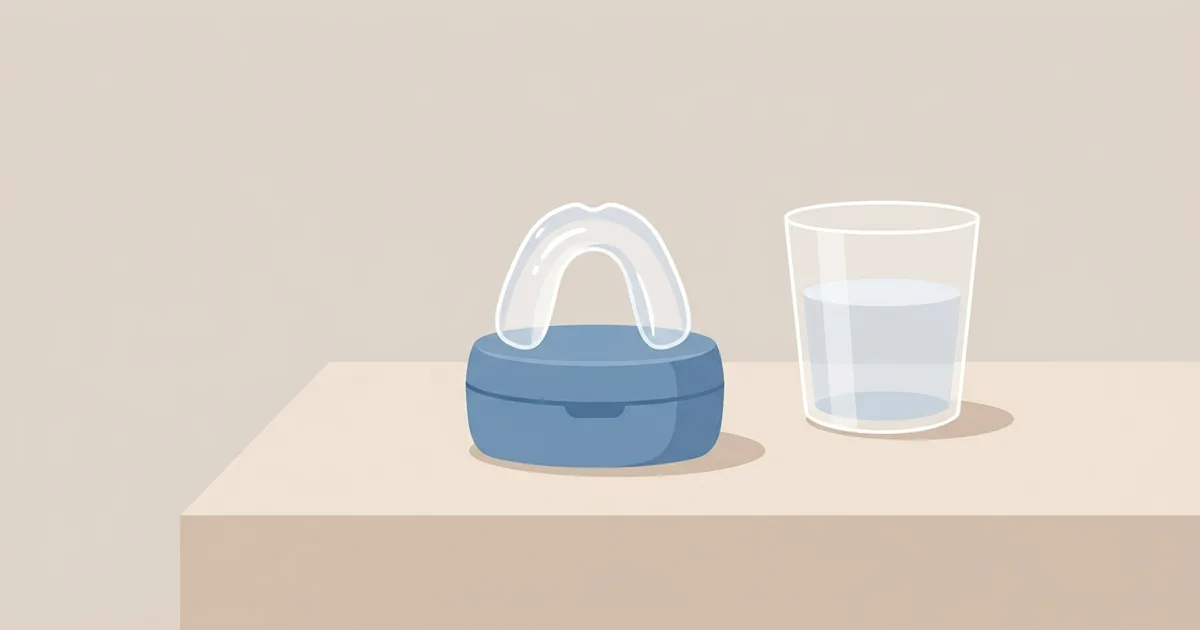
A custom night guard made from an impression of your own mouth takes the wear of grinding onto the guard instead of the teeth, and it eases the pressure on the jaw muscles and joints. It protects what is there without moving teeth back or ending the habit, which is why Dr. Estrada also looks at the bite and any missing teeth that might be feeding it. The night guards and TMJ care page covers what to expect.
What does shifting do to a partial denture or a night guard?
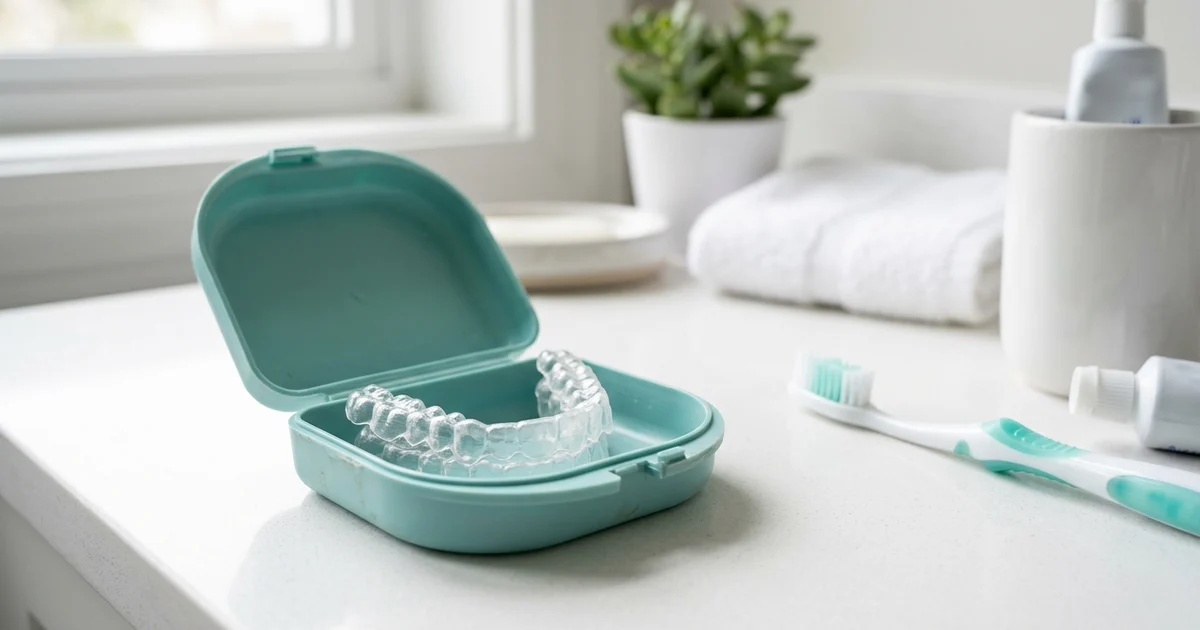
Shifting changes the fit of anything made to your teeth. A partial denture clasps onto specific teeth, and when those teeth drift even a little the clasps no longer seat, the partial rocks, and the gum underneath gets sore. A night guard that once snapped into place starts to feel tight on one side or lifts on the other, because the teeth it was made for have moved.
An appliance that stopped fitting is useful information, because it shows movement you might not see in the mirror. Bring your partial, your guard and any retainer to your checkups so the fit can be checked. An adjustment often restores the fit, and when it cannot, a remake to the current position is the answer. Never force an appliance that no longer seats.
What can be done about shifted teeth after 50?
The options depend on the cause, and the table pairs what you notice with the likely cause and what helps. Each one is handled here, and Dr. Estrada talks through what is realistic for your teeth before anything starts.
| What you notice | Likely cause | What helps |
|---|---|---|
| Lower front teeth crowding | Lifelong forward drift, worn edges | Clear aligners, FastBraces or braces, then a retainer |
| A new gap between front teeth | Bone loss from gum disease | Gum treatment first, then closing the space |
| Front teeth flaring outward | Bone loss, often with a heavy bite | Gum exam, then orthodontics once gums are stable |
| A tooth leaning into a space | A missing neighbor | Replace the gap, upright the tooth if needed |
| A partial or guard that stopped fitting | Teeth have moved since it was made | Adjustment, or a remake to the current position |
Clear aligners handle many cases of mild to moderate crowding and spacing in adults, FastBraces and traditional braces take on the more involved ones, and every orthodontic case finishes with a retainer to hold the new position. Where gum disease is the cause, the gums come first. Where a missing tooth is the cause, replacing it stops the drift at its source. For what adult treatment is like, read our post on braces at 40, 50, or beyond.
Most shifting after 50 is ordinary, and it can be left alone or straightened as you prefer. A new gap or flaring front teeth are the exception and should be checked. Call (727) 869-3886 or use our contact page to have the movement looked at, and bring any appliance that has stopped fitting. This article is general information, not a diagnosis. Whether the cause is drift, wear or the gums is decided at the exam.
Frequently Asked Questions
Do teeth keep shifting for the rest of your life?
Yes, slowly. The bone that holds teeth keeps remodeling as long as it is alive, so teeth answer to pressure from the bite, the tongue and the lips at every age. The movement is usually small and gradual, so it goes unnoticed for a decade and then seems sudden. A retainer worn at night is what holds a position once teeth have been straightened.
Can shifted teeth cause chewing problems or jaw soreness?
They can. When teeth drift, the upper and lower sets meet differently, and a bite that used to spread the load across many teeth can start landing on a few. Those teeth wear faster or feel sore, the jaw muscles work harder to find a comfortable closing position, and some people notice morning jaw tightness or a click. An exam of how the teeth meet shows whether the shift is the cause.
Will a night guard stop my teeth from shifting?
Not on its own. A night guard protects the teeth from grinding wear and eases the strain on the jaw, and a well-fitting guard does hold the teeth it covers while it is in. It is not designed to move teeth or to counter daytime drift. If holding position is the goal, a retainer made for that purpose is the right appliance, and in some cases one appliance can be made to do both jobs.
Can I use a retainer from years ago to straighten my teeth again?
No, and forcing one in can do harm. A retainer is made to hold teeth where they were on the day it was made, and teeth that have moved since will not fit back into it. Pushing it on puts uncontrolled pressure on the roots and the gum, can loosen a tooth, and can crack the retainer. If an old retainer feels tight, bring it to the office, because the mismatch shows how far the teeth have moved.